The verdict
$1,499How we tested the Steelcase Gesture
We sat in the Gesture for full workdays over three months — testing the 360-degree arms across postures, the back support, adjustability and long-hours comfort.
- Sat in it for full working days over three months
- Tested the arms while typing, on a phone and on a tablet
- Judged back support and the padded feel over long days
- Dialled in the adjustments and assessed build quality
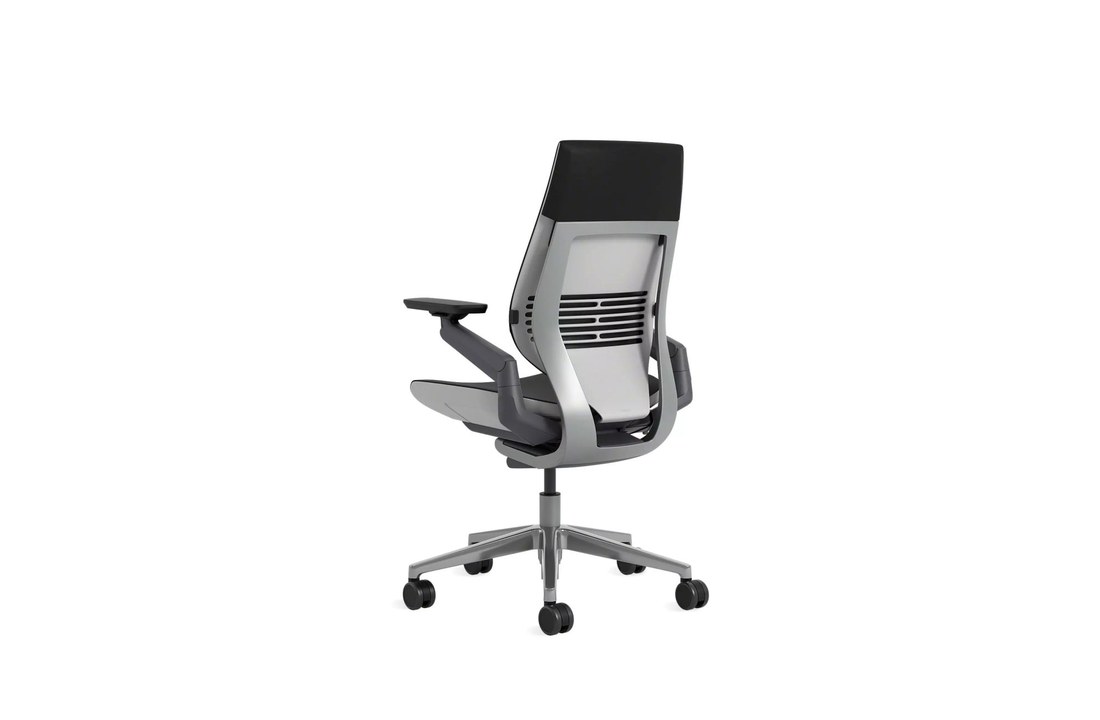
We no longer just type at a desk — we lean back with a phone, hunch over a tablet, sprawl to think. The Steelcase Gesture is the chair engineered for exactly that. Its 360-degree arms move almost anywhere to support your forearms in any posture, its contoured back follows your spine as you shift, and its padded, deeply adjustable frame is comfortable for a full working day. Backed by a lifetime frame warranty and long a Wirecutter top pick, it is the chair for the way we work now.
| Type | Ergonomic padded task chair |
| Arms | 360-degree, 4-way (height, width, depth, pivot) |
| Arm range | Widest in class — 10.25–22.5 in |
| Back | Contoured, supports the spine on the move |
| Seat | Flexible-edge, upholstered, adjustable depth |
| Capacity | Up to 400 lb |
| Recognition | Wirecutter Best Office Chair, 2015–2024 |
| Frame | Metal, high-performance fabric |
| Warranty | Lifetime frame; 12 yr mechanisms |
What the Steelcase Gesture is
The Gesture is Steelcase’s arm-focused ergonomic chair, designed around a simple observation: modern work involves constant posture changes — typing, then a phone, then a tablet, then a recline — and most chair arms cannot follow. The Gesture’s arms move in almost any direction to keep your forearms supported through all of it. It sits alongside the Leap in Steelcase’s flagship line, sharing the padded, spine-supporting philosophy but adding the most flexible arms on the market.
Design and materials
The Gesture is a padded, upholstered chair on a sturdy frame — understated rather than iconic, built to disappear into work. It uses a fair number of plastic components, but they are structural (for back flex) or covers over metal; the chair is solid and rated to 400 pounds. The seat has flexible edges that give where your legs meet it, and the padding delivers a plush, welcoming sit. It looks at home in any office or study, and it is built like the commercial furniture it is.
The 360-degree arms
The arms are the reason to buy this chair. They move up and down, in and out, forward and back, and pivot — the widest adjustment range of any chair, from 10.25 to 22.5 inches — so they support your forearms whether you are typing squarely at the desk, leaning back with a phone, or turned to a tablet. In our testing this was a genuine, everyday difference: your arms stay supported in postures where other chairs leave them dangling. For device-heavy work, nothing else matches it.
Back support and the sitting experience
Beyond the arms, the Gesture is a first-rate ergonomic chair. Its contoured back supports the spine and moves with you as you shift and recline, and the seat depth, recline tension and lumbar adjust to your body. In our testing it was comfortable through full working days, with a plush, supported feel closer to the padded Leap than the firm Aeron mesh. It is a chair you sink into and stay supported in — welcoming for people who find mesh chairs too firm.
Adjustability
The Gesture adjusts widely: the 360-degree arms, adjustable seat depth, recline tension and range, and lumbar support let almost anyone dial in a custom fit, which is Steelcase’s alternative to fixed sizes. The controls are intuitive and, like the Leap, most people set the chair once and leave it. The combination of the best arms in the business and Steelcase’s proven back support is what makes the Gesture a top-tier all-rounder rather than a one-trick chair.
Build quality and durability
The Gesture is built to commercial standards and rated for 24/7 use up to 400 pounds — genuinely heavy-duty. Steelcase backs it with a lifetime warranty on the frame and 12 years on the mechanisms, arms, cylinder, foam and casters, valid for round-the-clock use, with free repair or replacement. In practice these chairs last well over a decade of daily use. That durability, plus the warranty, is the foundation of the buy-once case, and it is why the chair holds its value.
How it compares to the alternatives
Against Steelcase’s own Leap, the Gesture adds the far more flexible 360-degree arms and a slightly different back feel, for more money — choose the Gesture if you switch between devices constantly, the Leap if pure desk-and-recline support is enough. Against the Herman Miller Aeron, the Gesture is padded and universally adjustable where the Aeron is breathable mesh with a sized fit. Against cheaper chairs, its arms, support and lifetime warranty are in a different tier.
Price, value and warranty
At around $1,499 the Gesture is a premium chair, priced above the Leap for its arms and above many Aeron configs. The value is the same top-tier calculus: a commercial-grade chair that lasts well over a decade, with a lifetime frame warranty, so the cost per year of comfortable, well-supported sitting is small. Refurbished Gestures are widely available at lower prices — a smart way into the best arms in the business for less. For device-heavy all-day work, it earns the premium.
Who it is for, and who should skip it
Buy it if you switch between keyboard, phone and tablet all day and want arms that support every posture, plus padded, deeply adjustable back support — and you want a chair that lasts a career. Skip it (for the Leap) if you mostly just type and recline and do not need the arm range, or (for the Aeron) if you want breathable mesh. For the modern, device-juggling desk worker, the Gesture is the chair.
Pros & cons
What we like
- 360-degree arms support your forearms in any posture — the best on the market
- Padded, contoured back supports the spine as you move
- Deeply adjustable to fit almost any body
- Rated to 400 lb with a lifetime frame warranty
- Long-running Wirecutter best-office-chair pick
Worth knowing
- Expensive, priced above the Leap
- Understated design, not a statement piece
- Padded, not breathable — warmer than a mesh chair
- The arm flexibility is wasted if you only ever type
Where to buy the Steelcase Gesture
Check the current price and availability before you buy — it moves.
Check the price →FAQ
Is the Steelcase Gesture worth it?
Steelcase Gesture vs Leap — which should I buy?
What makes the Gesture’s arms special?
Is the Steelcase Gesture good for back pain?
How much weight does the Gesture hold?
Does the Steelcase Gesture have a good warranty?
The Finer Home may earn a commission if you buy through links on this page, at no extra cost to you. We buy and test what we review; prices were accurate at publishing — confirm at checkout. See our affiliate disclosure.