
Kamado Joe Classic III Review
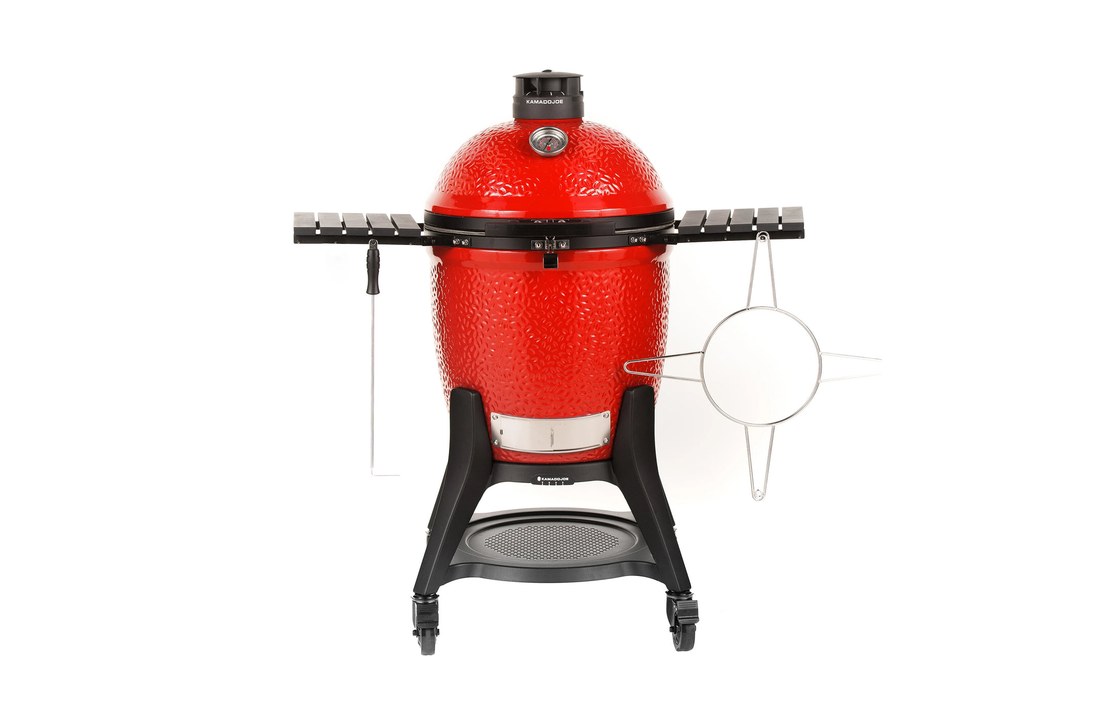
The verdict
$1,699How we tested the Kamado Joe Classic III
We cooked on the Classic III across a full season — searing steaks, smoking brisket and pork with the SloRoller, and baking — testing heat range, temperature hold and charcoal efficiency.
- Seared at high heat and held 225°F for long low-and-slow cooks
- Smoked pork and brisket with and without the SloRoller
- Used Divide & Conquer for multi-zone cooking
- Tracked charcoal efficiency, vent control and ash cleanup
A gas grill is fast and a pellet grill is hands-off, but neither sears like live fire or holds low heat like ceramic. The Kamado Joe Classic III does both. Its thick ceramic shell locks in heat and moisture, the Divide & Conquer system gives you multiple cooking levels, and the Harvard-designed SloRoller turns it into a true smoker. From a 700-degree steak sear to an 18-hour brisket, it is the one charcoal cooker that genuinely does it all — and lasts a lifetime.
| Type | 18 in ceramic charcoal kamado grill & smoker |
| Cooking area | 250 sq in base; up to 510 sq in with Divide & Conquer |
| Temperature | 225–750°F |
| Smoke insert | SloRoller hyperbolic (Harvard-developed) |
| Grates | Stainless steel, 3-tier Divide & Conquer |
| Firebox | AMP (Air Mesh Panel), stress-relieving |
| Hardware | Stainless latch, built-in thermometer, folding side shelves, ash tool |
| Body | Thick heat-resistant ceramic |
| Warranty | Lifetime ceramic, 5 years metal |
What the Kamado Joe Classic III is
The Classic III is an 18-inch ceramic kamado — a charcoal grill and smoker whose thick ceramic walls hold heat and moisture far better than metal. It sits at the centre of Kamado Joe’s line and is the size most households land on. What separates the Series III from cheaper kamados is the ecosystem: the Divide & Conquer multi-level grate system, the SloRoller smoke insert, an easy-open latch and a slide-out ash drawer. It sears, roasts, bakes and smokes on one cooker.
Design and build quality
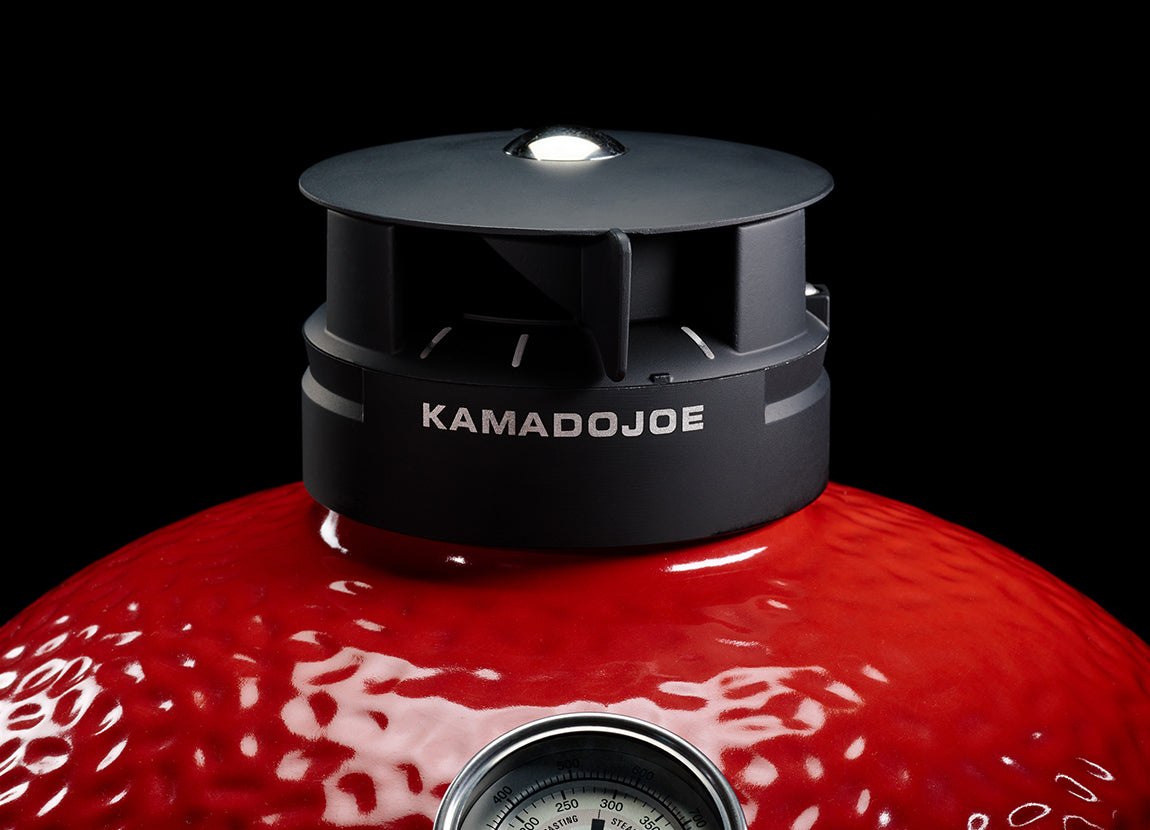
The build is genuinely heirloom-grade. A thick, heat-resistant ceramic shell is wrapped in a powder-coated shell and carried on a rolling cart with folding aluminium side shelves. The AMP firebox is engineered to relieve stress and resist the cracking that plagues cheaper kamados, the top vent is a precision cast-aluminium wheel, and the stainless latch makes the heavy lid easy to open one-handed. It is heavy and solidly made — a cooker you buy once and keep for decades.
Setting it up
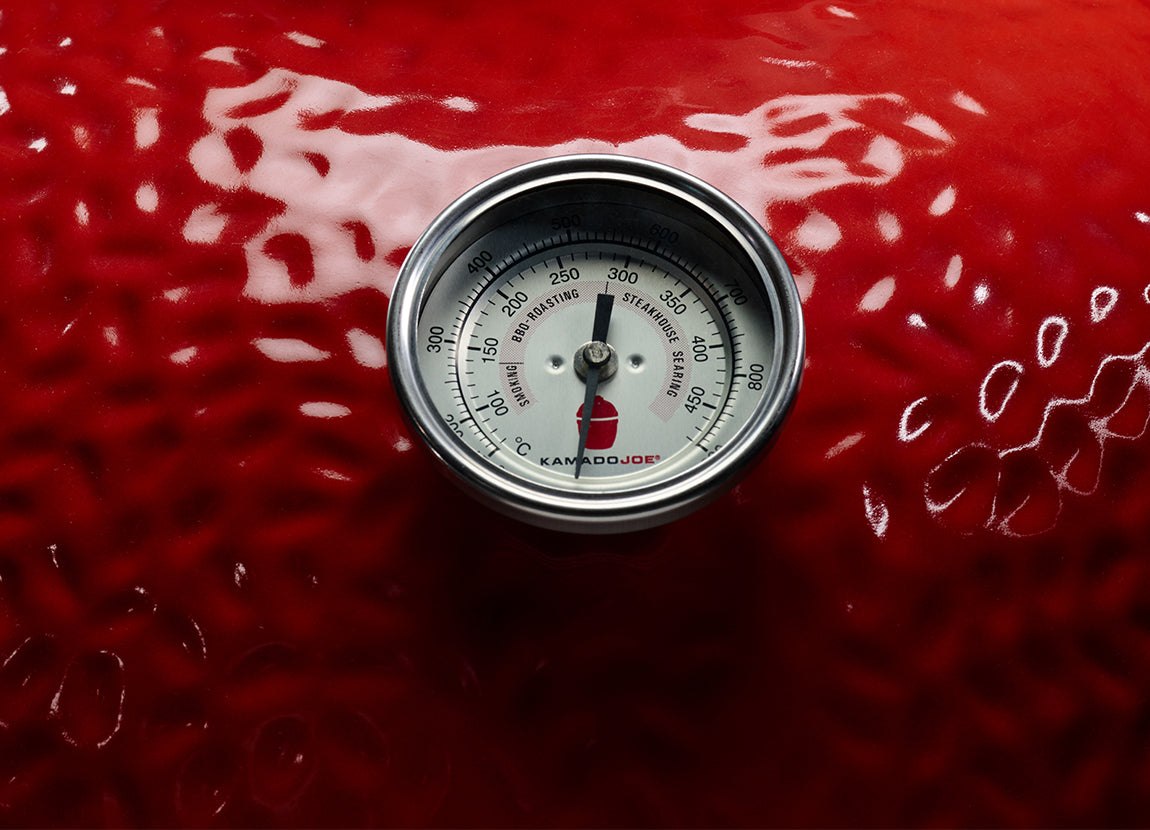
Assembly of the cart and shelves takes an hour or so out of the box; the ceramic body comes largely pre-assembled. First use needs only a burn-in to cure any residues. Lighting is charcoal — a couple of fire-starters and a few minutes — and temperature is set by adjusting the bottom and top vents. There is a short learning curve to controlling airflow, but once you understand the vents, holding a target temperature becomes second nature.
Heat, searing and temperature range
The range is the headline: 225°F for low-and-slow up to 750°F for searing. In our testing the ceramic came up to searing heat and laid down a steakhouse crust, then — crucially — held a rock-steady 225°F for hours once the vents were set, because the thick walls buffer temperature swings. That thermal mass is the whole point of ceramic: it sips charcoal and forgives the odd lid-open in a way thin metal grills never do.
Smoking with the SloRoller
The SloRoller is what makes the Classic III a real smoker. Developed with researchers at Harvard, this hyperbolic insert forces heat and smoke into a rolling, cyclonic flow that wraps the food evenly instead of rising straight past it. In our testing it produced a deeper, more even smoke and fewer hot spots on long cooks — noticeably better bark and smoke ring on pork and brisket than an open ceramic. Swapping it in and out takes seconds.
Everyday cooking and versatility
The Divide & Conquer system is why one cooker covers so much: multiple half-moon grates at different heights let you sear over direct heat on one side while roasting vegetables on the other, or set up two temperature zones. With accessories the Classic III bakes pizza, roasts a whole chicken and smokes ribs. The 250 square inches of base grate expands to 510 across tiers — enough for a family cook, though a very large crowd may want the bigger Big Joe.
Cleaning and maintenance
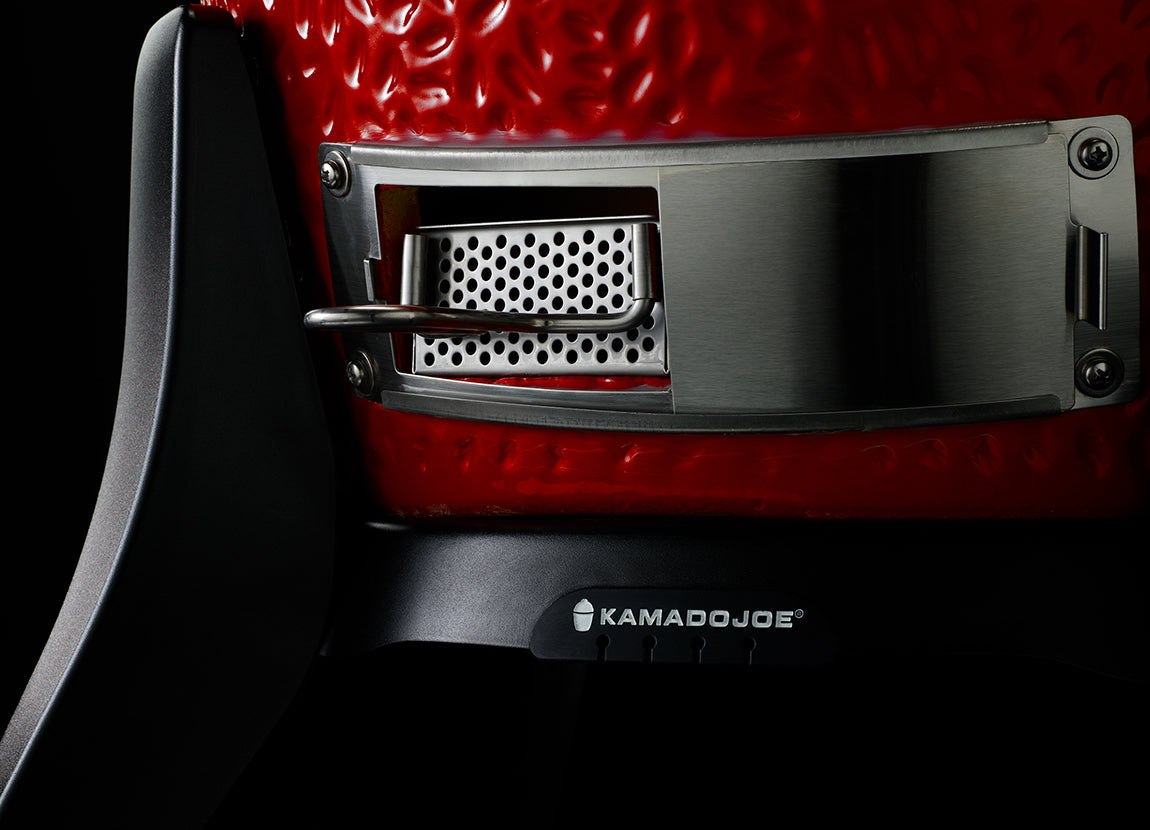
Ceramic is low-maintenance: burn off residue with a hot fire and brush the grates, and the slide-out ash drawer makes clearing spent charcoal quick — a real improvement over scooping ash from the base. The ceramic never needs seasoning and resists rust entirely. Keep it covered, empty the ash, and check the felt gasket over time. Long-term care is minimal, which is part of why these cookers last for decades.
Living with it day to day
Living with a kamado is different from a gas grill: it takes a few more minutes to light and a little vent management, but it pays back in flavour and flexibility. Once you learn it, weeknight chicken and weekend brisket both come off the same cooker, and charcoal efficiency means long cooks are cheap on fuel. It is a cooker that invites you to cook more — the kind of tool that becomes a hobby as much as an appliance.
How it compares to the alternatives
Against a pellet grill like the Traeger Ironwood, the Classic III trades set-and-forget app convenience for higher searing heat, live-fire flavour and lower running cost — at the price of more hands-on management. Against a gas grill, it is slower to light but sears hotter and smokes properly. Against cheaper kamados, the Series III’s SloRoller, Divide & Conquer, ash drawer and crack-resistant firebox are the reasons it stays the pick.
Price, value and warranty
At around $1,699 the Classic III is a premium kamado, and the warranty frames the value: a lifetime guarantee on the ceramic body and five years on metal parts, for a cooker owners routinely use for fifteen-plus years. Charcoal efficiency keeps running costs low, and the do-everything versatility can replace a separate grill and smoker. Spread over its long life, it is one of the better cost-per-cook outdoor purchases you can make.
Who it is for, and who should skip it
Buy it if you want one charcoal cooker that sears, smokes and bakes, love live-fire flavour, and want a grill that lasts a lifetime. Skip it if you want pure hands-off convenience — a pellet grill is easier — or if you only ever grill a couple of burgers and do not want to manage charcoal and vents. For the cook who wants to do it all over live fire, this is the one.
Pros & cons
What we like
- Sears to 750°F and holds 225°F for hours on one cooker
- SloRoller insert makes it a genuinely excellent smoker
- Divide & Conquer grates give multiple zones and cooking styles
- Thick ceramic is fuel-efficient and buffers temperature swings
- Lifetime ceramic warranty — a true buy-once cooker
Worth knowing
- Charcoal means more setup and vent management than gas or pellet
- Heavy — not something you move around often
- Premium price versus basic kamados and gas grills
- 250 sq in base may feel tight for very large crowds
Where to buy the Kamado Joe Classic III
Check the current price and availability before you buy — it moves.
Check the price →FAQ
Is the Kamado Joe Classic III worth the money?
What does the SloRoller do?
How much can you cook on a Classic III?
Is a kamado hard to use?
Kamado Joe vs a pellet grill — which is better?
How long does a Kamado Joe Classic III last?
The Finer Home may earn a commission if you buy through links on this page, at no extra cost to you. We buy and test what we review; prices were accurate at publishing — confirm at checkout. See our affiliate disclosure.