The verdict
$1,499How we tested the Traeger Ironwood
We cooked on the Ironwood across a full winter — briskets, pork shoulders and weeknight dinners — watching temperature stability in the cold, pellet use over long smokes, and how much the app really changes the workflow.
- Ran low-and-slow smokes and everyday grilling through cold-weather months
- Logged temperature hold at a 225°F set point against the controller and probes
- Tracked pellet consumption and lid-recovery time on long cooks
- Used the WiFIRE app for remote monitoring to judge whether it is useful or a gimmick
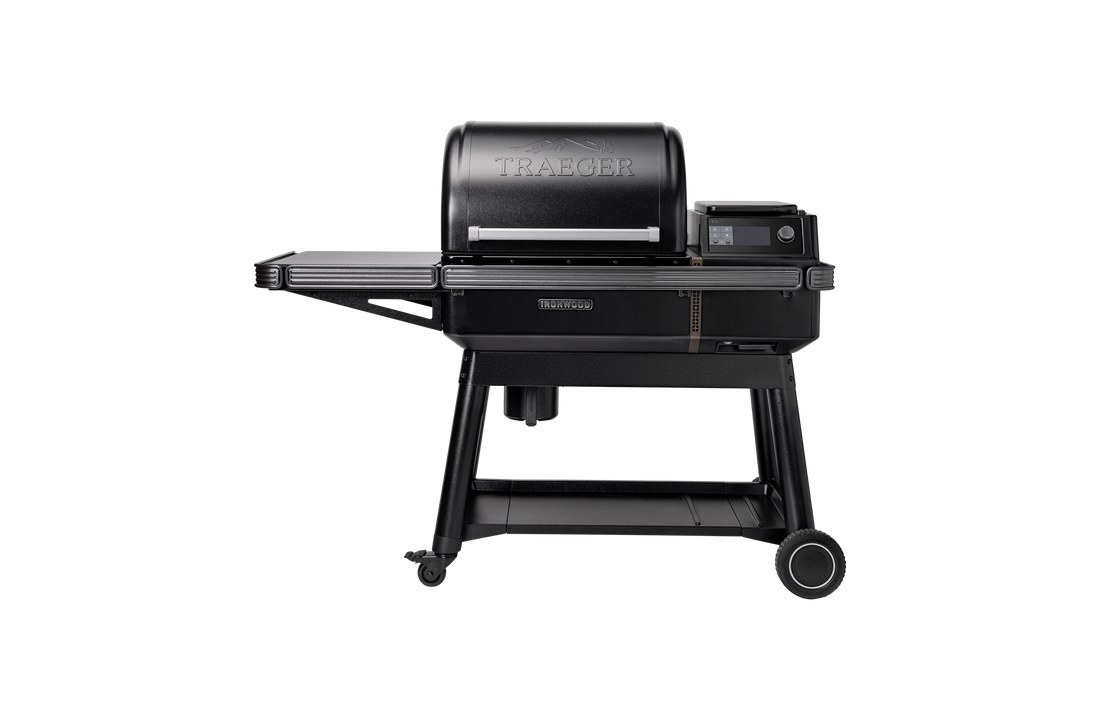
Pellet grills promise convenience, and most half-deliver. The Traeger Ironwood is the one where the convenience is real — steady temperatures, an insulated body that holds heat in cold weather, and an app that is genuinely part of the workflow rather than a gimmick. At $1,499 it is a serious outdoor-cooking purchase, and it is the one we would make.
| Type | WiFi wood-pellet grill & smoker |
| Cooking area | 616 sq in (up to 924 on Ironwood XL) |
| Temperature range | 165–500°F |
| Hopper | 20 lb, with pellet sensor |
| Connectivity | WiFIRE app, 2 meat probes |
| Construction | Fully insulated, powder-coated steel |
| Cleaning | EZ-Clean grease & ash keg |
| Warranty | 10 years |
What the Traeger Ironwood is
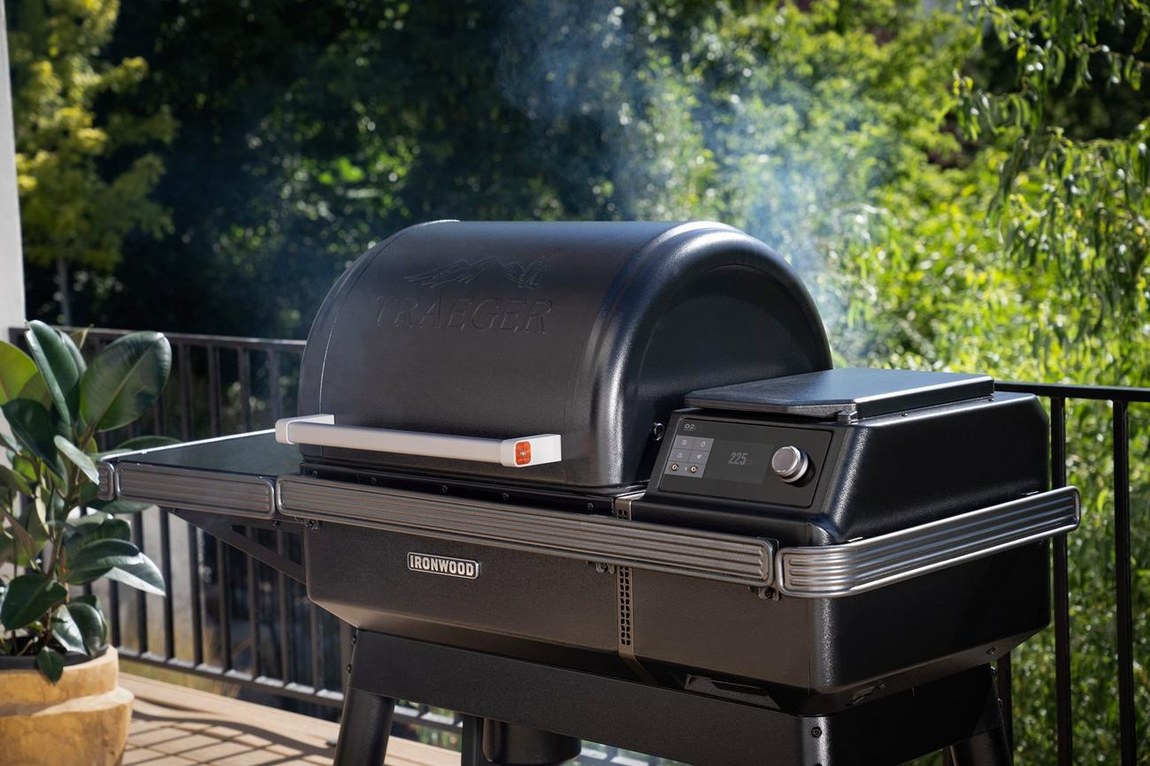
The Ironwood is a WiFi-connected wood-pellet grill and smoker. An auger feeds hardwood pellets to a fire pot, a controller and fan manage airflow to hold temperature, and the whole thing connects to your phone. It sits in the middle of Traeger’s line — above the entry Pro series, below the top-tier Timberline — and it is the size and price most serious home smokers land on.
Design and build quality
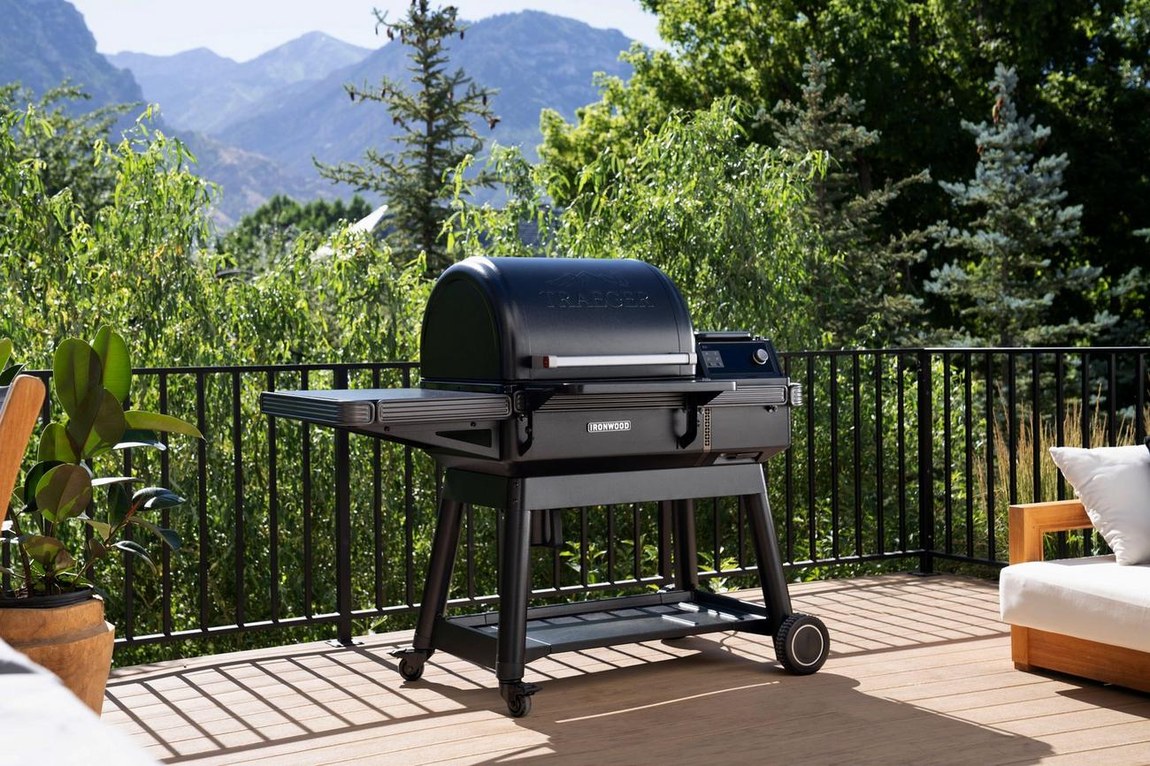
The upgrade you are paying for is the fully insulated, dual-wall body. It holds heat far better than single-wall pellet grills, which means steadier temperatures, faster recovery when you open the lid, and lower fuel use over a long cook. Build quality is solid powder-coated steel, the hopper has a pellet-level sensor, and the EZ-Clean grease-and-ash keg collects everything in one bucket for genuinely quick cleanup.
Setting it up
Assembly takes about an hour out of the box, then a 45-minute initial burn-in to cure the interior before the first cook. Connecting to WiFi and the Traeger app is a five-minute step, and once it is done the grill is ready whenever you are. Traeger includes two meat probes, so you can track two cuts from the first cook without buying accessories.
Temperature stability and smoke
In our testing across a full winter of cooks, the Ironwood held a 225°F set point within about 10–15 degrees even in cold weather — the range that matters for brisket and pork shoulder. The insulation is why: it sips pellets and recovers quickly. Traeger’s Super Smoke mode leans into wood-fired flavour at low temps, and we got a deeper smoke ring than from an older single-wall Traeger.
The WiFIRE app and probes
The app is the feature. You set the grill temperature and a meat-probe target from the couch, get an alert when the internal temp hits your number, and can bump the heat to finish without walking outside. On an overnight brisket, that is the difference between checking a thermometer every hour and actually sleeping. Two included probes let you track two cuts at once, and step-by-step guided cooks are built in.
Range and everyday cooking
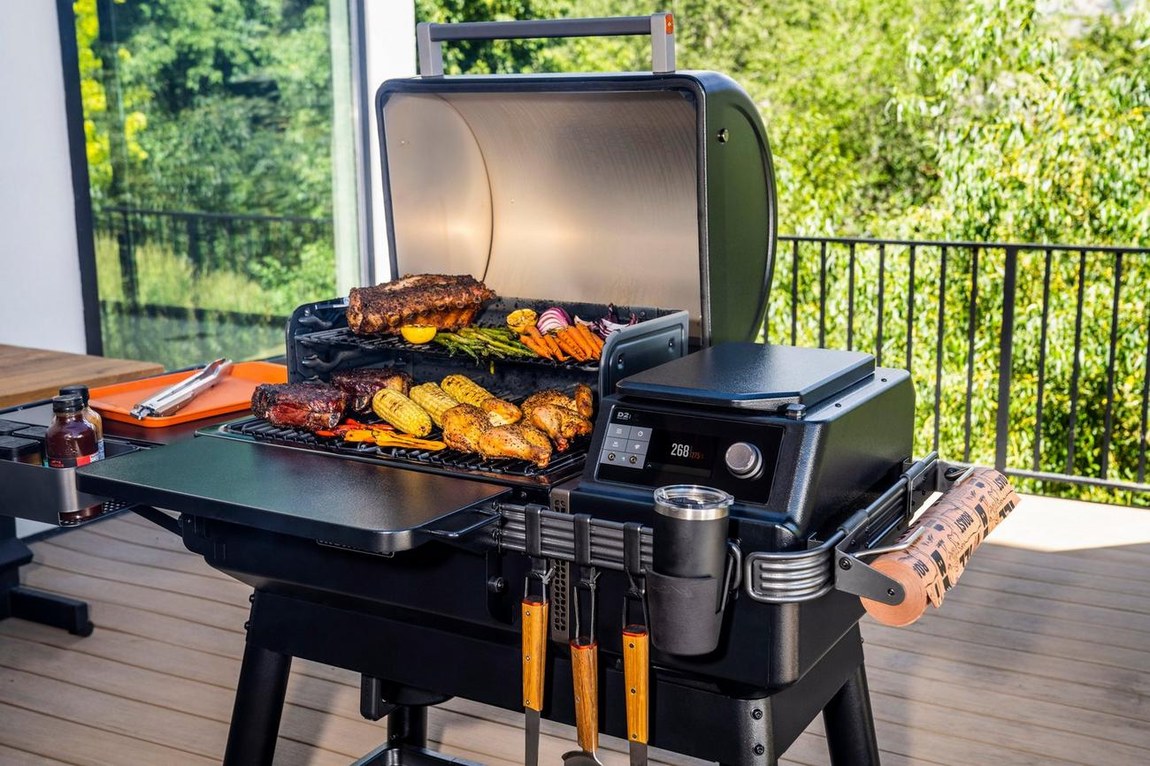
The 165–500°F range covers true low-and-slow smoking up through roasting and everyday grilling. The 616 square inches handled a couple of pork shoulders plus sides comfortably; the Ironwood XL steps up to 924 square inches for larger crowds. It is happy doing weeknight chicken as well as weekend brisket, so it does not sit idle between big cooks.
Cleaning and maintenance
The EZ-Clean keg is the standout: drippings and ash collect in one accessible container, so cleanup is emptying a bucket rather than a disassembly. You vacuum the fire pot every few cooks and keep the grease management clear to avoid flare-ups. Pellets should be stored dry — damp pellets are the most common cause of temperature swings on any pellet grill.
How it compares to the alternatives
Against the cheaper Pro series, the Ironwood adds insulation, an upgraded controller and a far better warranty — the gap shows most on long, cold cooks. Against gas, it trades searing heat for smoke and hands-off convenience. Rivals like the Weber SmokeFire compete on price, but Traeger’s app ecosystem and reliability are the reason it stays our pick in this bracket.
Price, value and warranty
At $1,499 the Ironwood sits above entry pellet grills and below the top-tier Timberline. You pay for the insulation, controller and app reliability — and a 10-year warranty that is among the best in the category, which does a lot to justify the price on a grill you expect to keep for a decade. For a household that smokes most weekends, it is the sweet-spot Traeger.
Who it is for, and who should skip it
Buy it if you want hands-off low-and-slow smoking with reliable app control and you cook outdoors often enough to justify a $1,500 grill. Skip it if your priority is steak-house searing (get a gas or charcoal grill, or add a sear station), or if you need an off-grid, no-power cooker — every pellet grill needs mains electricity.
Pros & cons
What we like
- Rock-steady temperatures, even in cold weather
- Fully insulated body sips pellets and recovers heat fast
- WiFIRE app control that genuinely changes long cooks
- Two included meat probes; EZ-Clean ash keg
- Class-leading 10-year warranty
Worth knowing
- Sears, but not as hot as gas or charcoal
- Pellet use climbs in cold weather
- Needs mains power — not for off-grid cooking
- App occasionally needs a WiFi reconnect
Where to buy the Traeger Ironwood
Check the current price and availability before you buy — it moves.
Check the price →FAQ
Is the Traeger Ironwood worth it over the cheaper Pro series?
Can you sear a steak on the Traeger Ironwood?
How much do pellets cost to run it?
Ironwood vs Ironwood XL — which size?
Does the Traeger Ironwood need WiFi to work?
How long does a Traeger Ironwood last?
The Finer Home may earn a commission if you buy through links on this page, at no extra cost to you. We buy and test what we review; prices were accurate at publishing — confirm at checkout. See our affiliate disclosure.