The Best Home Espresso Machines
Our top picks at a glance
- Best overall: Breville Barista Express
- Best upgrade: Breville Dual Boiler
- Best for beginners: De’Longhi La Specialista Arte Evo
- Best super-automatic: Jura ENA 8
How we chose these espresso machines
We bought and lived with each machine, pulling shots daily for weeks and judging them on the coffee in the cup, the grinder, the learning curve and how they held up — not on marketing claims.
- Pulled shots daily on each machine for weeks
- Compared grinder quality, dial-in range and temperature stability
- Judged the learning curve from first shot to consistent shots
- Weighed build quality, upkeep and price against real use
After months of pulling shots on machine after machine, four rise to the top for home kitchens — and which one is right for you depends less on price than on how involved you want to be. Below are our picks for the learner, the enthusiast, the beginner who wants great coffee fast, and the person who just wants a button.
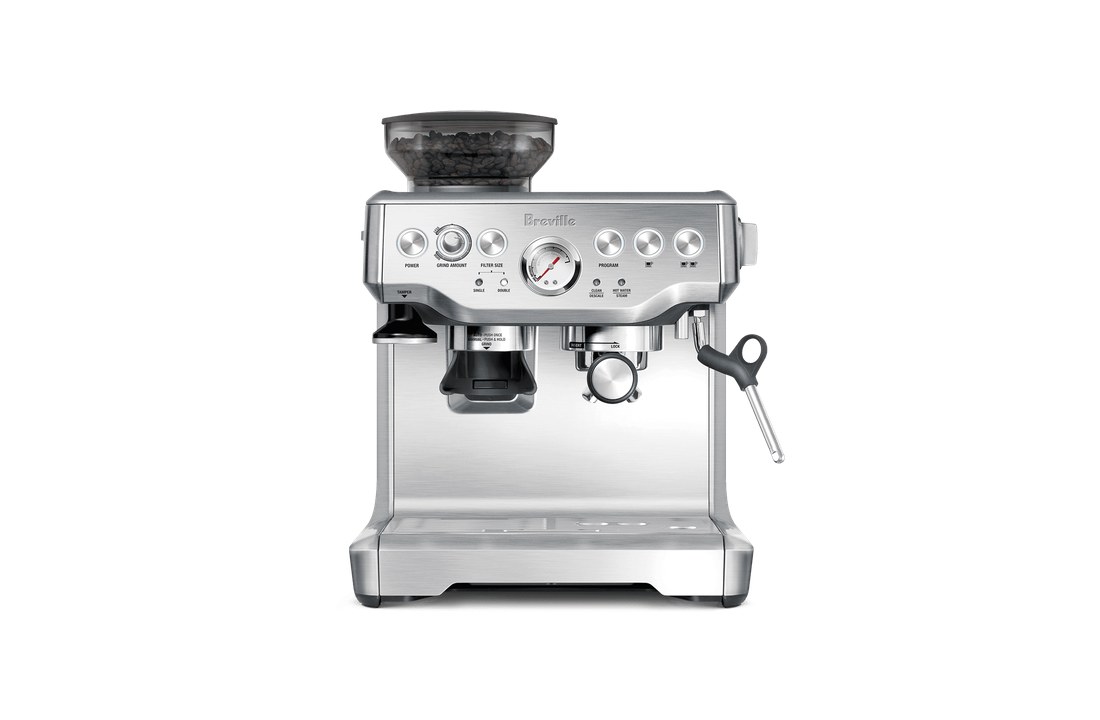
Breville Barista Express
A built-in grinder, a forgiving learning curve and the most adjustable grind at this price.
- Excellent built-in grinder with wide adjustment
- Forgiving for beginners, rewarding for enthusiasts
- Sturdy, mostly stainless build
- Single boiler means a wait between shot and steam
- Takes practice to master
- Counter footprint is not small
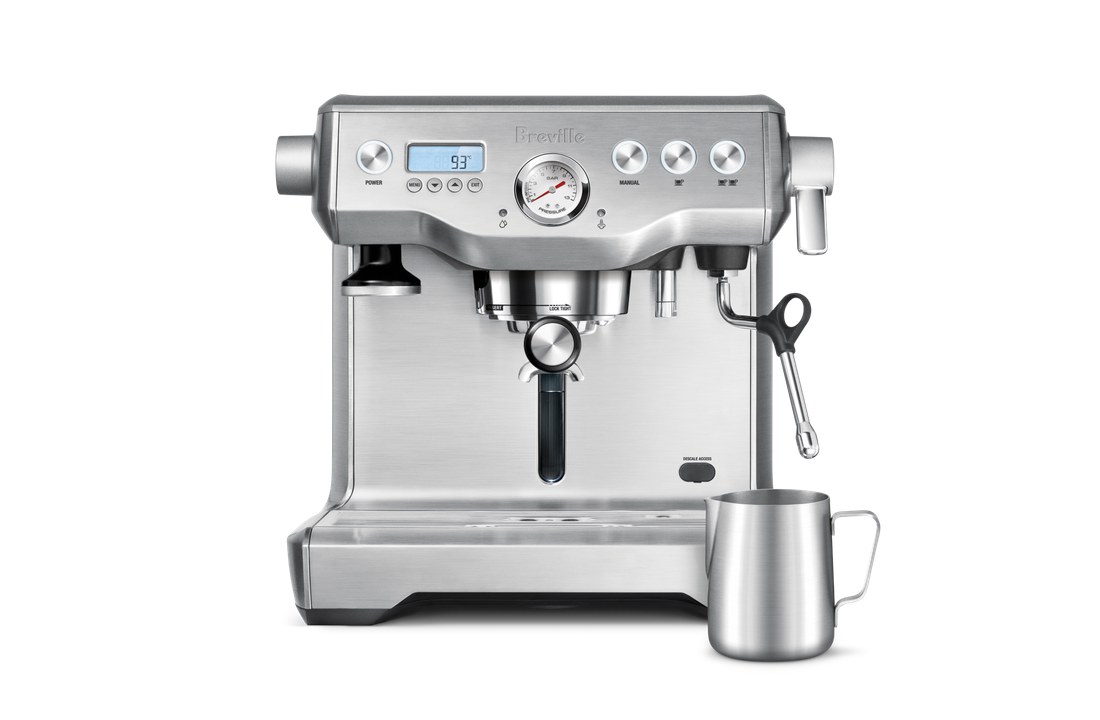
Breville Dual Boiler
Two boilers for simultaneous brewing and steaming, with cafe-level temperature stability.
- Dual boilers: brew and steam at once
- Excellent, stable temperature control
- Serious build for years of daily use
- Expensive
- No built-in grinder — budget for one
- Overkill for occasional drinkers
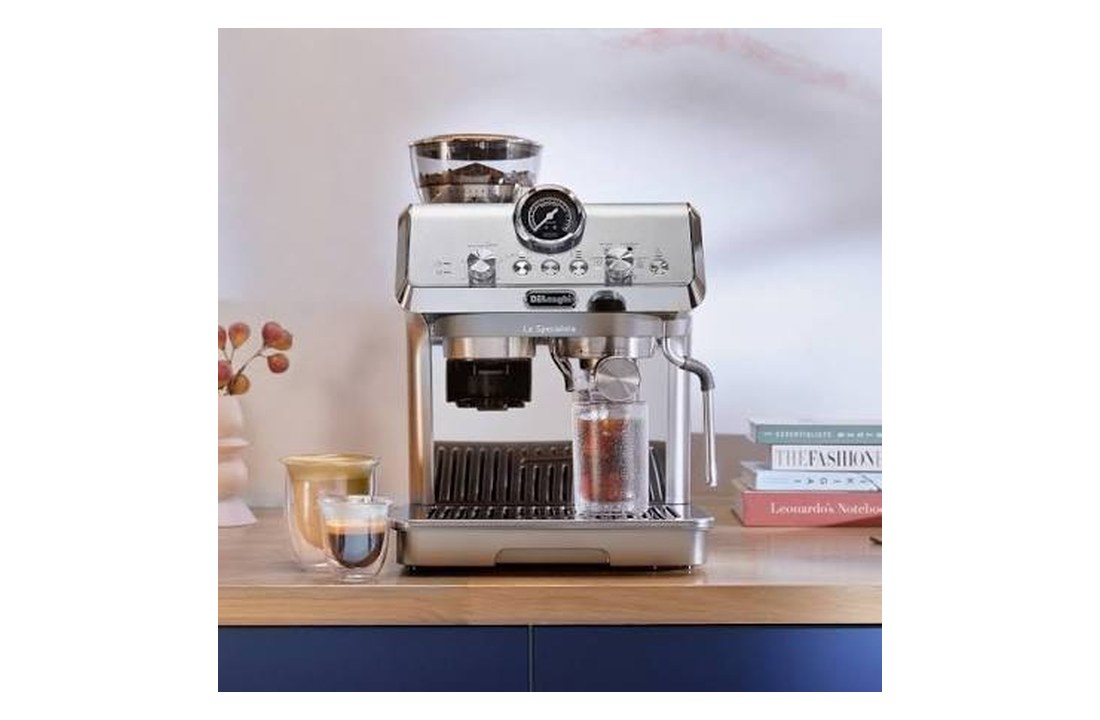
De’Longhi La Specialista Arte Evo
Sensor grinding and an assisted tamp remove the two steps beginners get wrong most.
- Automates dosing and tamping
- Fast, consistent results for beginners
- Usually a little cheaper than the Breville
- Less grind control than the Breville
- Group runs cooler
- A touch more plastic in the build
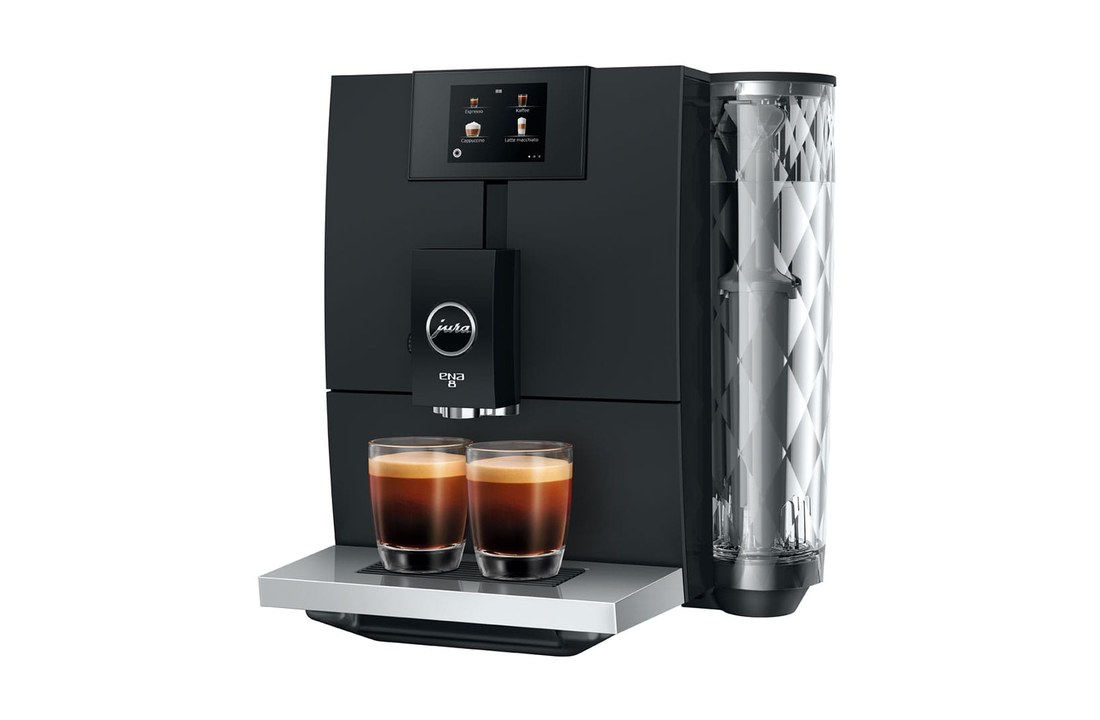
Jura ENA 8
One-touch espresso and milk drinks with automated grinding, brewing and cleaning.
- Genuine one-touch operation
- Automated rinsing and cleaning
- Compact for a super-automatic
- Expensive for the coffee quality
- Less control than a manual machine
- Milk system needs regular upkeep
What to look for
Built-in grinder or separate?
A grinder matters as much as the machine. All-in-one models like the Breville Barista Express are convenient and save counter space; enthusiast machines like the Dual Boiler leave the grinder to you, which means budgeting for a good separate one. Freshly ground beans are non-negotiable for real espresso either way.
Single boiler, dual boiler or thermoblock?
Single-boiler machines make you wait between brewing and steaming; dual boilers do both at once and hold temperature better, which is why they cost more. Super-automatics use a thermoblock and prioritize speed and convenience over the last ounce of quality. Match the system to how many drinks you make back to back.
How much do you want to learn?
Be honest with yourself. A semi-automatic rewards practice with better coffee but asks for it; a guided or super-automatic machine gets you a good drink with almost no skill. There is no wrong answer — only the machine that fits how you actually want to spend your mornings.
FAQ
What is the best espresso machine for most people?
Do I need a separate grinder?
Which is best for a complete beginner?
Are super-automatic machines worth it?
How much should I spend on a first espresso machine?
Is espresso at home cheaper than a cafe?
The Finer Home may earn a commission if you buy through links on this page, at no extra cost to you. We buy and test what we review; prices were accurate at publishing — confirm at checkout. See our affiliate disclosure.