
Google Nest Learning Thermostat (4th Gen) Review
The verdict
$279How we tested the Nest Learning Thermostat
We ran the Nest 4th gen for two months — testing the auto-learning schedule, the included room sensor, energy savings, the no-C-wire install and Google Home control.
- Installed it and ran it for two months
- Tested how quickly the auto-schedule learned our routine
- Used the included room sensor to balance a cold room
- Tracked energy use and tested voice control
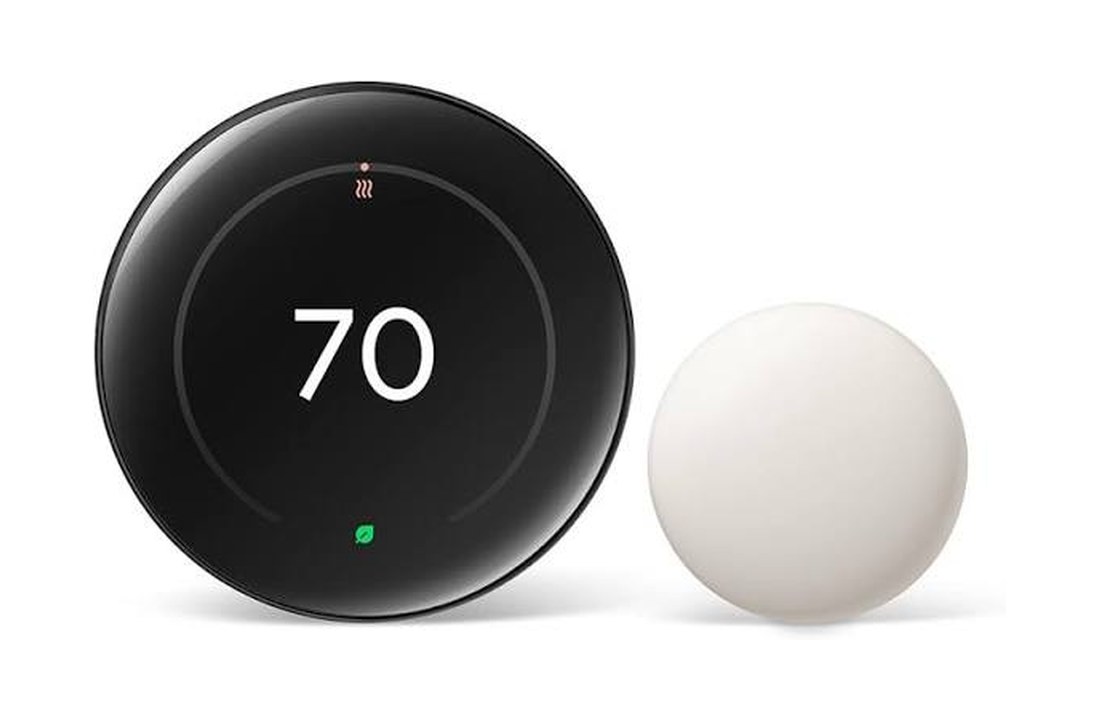
Where most smart thermostats ask you to build a schedule, the Nest Learning Thermostat builds one for you. In its first week it watches when you turn it up and down and quietly programs itself around your life, adjusting as your routine changes. The fourth-generation model adds a gorgeous borderless display that shows the time and weather from across the room, a redesigned energy-saving suite, and — finally — a room temperature sensor in the box. It is the thermostat for people who want it to just handle things.
| Type | Wi-Fi learning thermostat |
| Display | 2.7 in borderless circular, Dynamic Farsight |
| Learns | Builds a schedule from your habits automatically |
| Sensors | Motion, temperature, humidity, ambient light |
| Included | One Nest Temperature Sensor (up to 6 supported) |
| Savings | Up to about 31% on heating & cooling |
| Extras | Adaptive Eco, smart ventilation, System Health Monitor |
| Install | Power Sharing — no C wire in most homes |
| Warranty | Limited (varies) |
What the Nest Learning Thermostat is
The Nest Learning Thermostat is Google’s flagship smart thermostat, and the one that made ‘learning’ the category’s defining idea. Rather than requiring you to program a schedule, it observes the temperatures you choose and when, then builds and maintains a schedule automatically. The fourth-generation model refines the concept with a bigger, borderless display, new energy-saving features, and an included Nest Temperature Sensor for balancing comfort across rooms. It is the thermostat for people who want smart heating without the setup.
Design and the display
The Nest has always been the best-looking thermostat, and the 4th gen is the most striking yet: a 2.7-inch borderless circular screen with a mirror-like finish that reads as an object, not a control. Its Dynamic Farsight feature lights up as you approach and shows a clock, the temperature or the weather from across the room, so it doubles as a wall display. You turn the outer ring to adjust and press to select — the same intuitive dial that made Nest famous. It is a genuine upgrade to a wall.
Learning and scheduling
Auto-scheduling is the Nest’s signature. In its first days it learns the temperatures you like and when — warmer in the morning, cooler at night — and programs itself, then keeps adapting as your habits shift. In our testing this ‘set nothing’ approach genuinely worked: within a week the thermostat was anticipating our routine without any manual schedule. For people who never program a thermostat, this is the feature that actually saves energy, because the schedule is real rather than ignored.
Sensors and room comfort
The 4th gen finally includes a Nest Temperature Sensor in the box — the feature the ecobee long had over it. Placed in a bedroom or office, the sensor lets the thermostat prioritise comfort in the rooms you actually use, and you can add up to six. On board, motion, humidity and ambient-light sensors feed the learning and the display. In our testing the included sensor fixed the classic cold-room problem, closing much of the gap with ecobee’s multi-room comfort.
Energy savings
The Nest’s whole point is lower bills, and it delivers through learning plus a refreshed energy-saving suite — Adaptive Eco, natural heating and cooling, and smart ventilation that analyse conditions to cut waste. Google cites savings of up to 31% on heating and cooling. In our testing the savings came mostly from the automatic schedule and eco adjustments doing their work without us thinking about it. Over a couple of years, the energy savings meaningfully offset the price.
Setup and installation
Installation is refreshingly easy for a thermostat: Power Sharing means no C wire is required in most homes, so the Nest works where other smart thermostats need extra wiring. The in-app guide walks you through connecting the wires and mounting the unit in about 30 minutes, and it is compatible with most 24V HVAC systems (gas, electric, heat pump, radiant). A new System Health Monitor even watches your HVAC for problems. For a DIYer, it is one of the simpler smart-home installs.
Smart home and everyday use
The Nest lives in the Google Home ecosystem and supports Matter, so it fits modern smart homes and works with Google Assistant and Alexa for voice control. Day to day, it mostly runs itself — adjusting to your schedule, showing the weather as you pass, nudging you toward efficient settings. The app is clean and the controls intuitive. It is the thermostat you install and then largely forget about, which for most people is exactly the goal.
How it compares to the alternatives
Against the ecobee Smart Thermostat Premium, the Nest counters ecobee’s sensor-and-air-quality edge with automatic learning, a more striking display, and now an included room sensor of its own — while ecobee still leads on air-quality monitoring, HomeKit support and built-in Alexa. It is close: choose the Nest for hands-off learning and looks, the ecobee for air quality and ecosystem breadth. Against basic thermostats, the Nest’s learning and savings are a clear step up.
Price, value and who it’s for
At around $279 with the sensor included, the Nest is priced with the premium smart thermostats, and the value is strong now that the sensor is in the box: automatic scheduling, real energy savings, an easy no-C-wire install and a beautiful display. Buy it if you want a thermostat that programs itself and looks great, and you like Google’s ecosystem. Skip it (for the ecobee) if air-quality monitoring and HomeKit matter more to you, or (for a basic model) if you will not use the smarts.
Pros & cons
What we like
- Learns and programs your schedule automatically — set nothing
- Beautiful borderless display shows time and weather from across the room
- Now includes a room temperature sensor in the box
- No C wire needed in most homes thanks to Power Sharing
- Real energy savings plus a new HVAC health monitor
Worth knowing
- Ecobee still leads on air-quality monitoring and HomeKit
- Best experience assumes you use the Google ecosystem
- Premium price versus basic smart thermostats
- Learning takes a week or so to settle in
Where to buy the Nest Learning Thermostat
Check the current price and availability before you buy — it moves.
Check the price →FAQ
Is the Nest Learning Thermostat worth it?
Nest vs ecobee — which should I buy?
Does the Nest Learning Thermostat need a C wire?
Does the Nest come with a room sensor?
How much energy does the Nest save?
Is the Nest Learning Thermostat easy to install?
The Finer Home may earn a commission if you buy through links on this page, at no extra cost to you. We buy and test what we review; prices were accurate at publishing — confirm at checkout. See our affiliate disclosure.