
ecobee Smart Thermostat Premium Review
The verdict
$249How we tested the ecobee Smart Thermostat Premium
We ran the ecobee Premium in a home for two months — testing the room sensor, air-quality monitoring, energy savings, install and smart-home integration.
- Installed it and ran it for two months across heating and cooling
- Placed the SmartSensor to fix a cold room
- Tracked energy use and the air-quality readings
- Tested Alexa, HomeKit and app control
A thermostat that heats the whole house to fix one cold office is wasteful; the ecobee Smart Thermostat Premium is smarter than that. Its included room sensor measures temperature and occupancy where you actually sit, so the system heats and cools for the rooms in use — ending the cold-office problem — while learning your schedule to cut energy use. Add built-in air-quality monitoring, voice control baked in, and a genuinely handsome screen, and it is the smart thermostat we recommend first.
| Type | Wi-Fi smart thermostat |
| Sensor | Includes a SmartSensor (occupancy + temperature) |
| Air quality | Built-in indoor air-quality monitor |
| Savings | Up to about $284/year on heating & cooling |
| Voice | Siri & Alexa built-in; works with Google, HomeKit, SmartThings |
| Extras | Doorbell Live View, smoke-alarm detection |
| Occupancy | Geofencing + sensor presence |
| Install | Hardwired |
| Warranty | 3 years |
What the ecobee Smart Thermostat Premium is
The Smart Thermostat Premium is ecobee’s top-tier Wi-Fi thermostat — a wall unit that replaces your existing thermostat and adds smart scheduling, remote sensing, air-quality monitoring and voice control. Its defining advantage over a basic smart thermostat is the included SmartSensor, which measures temperature and occupancy in another room so the system can balance comfort across the home rather than just at the hallway where thermostats usually live. It is the flagship of ecobee’s line and the one most people should buy.
Design and the screen
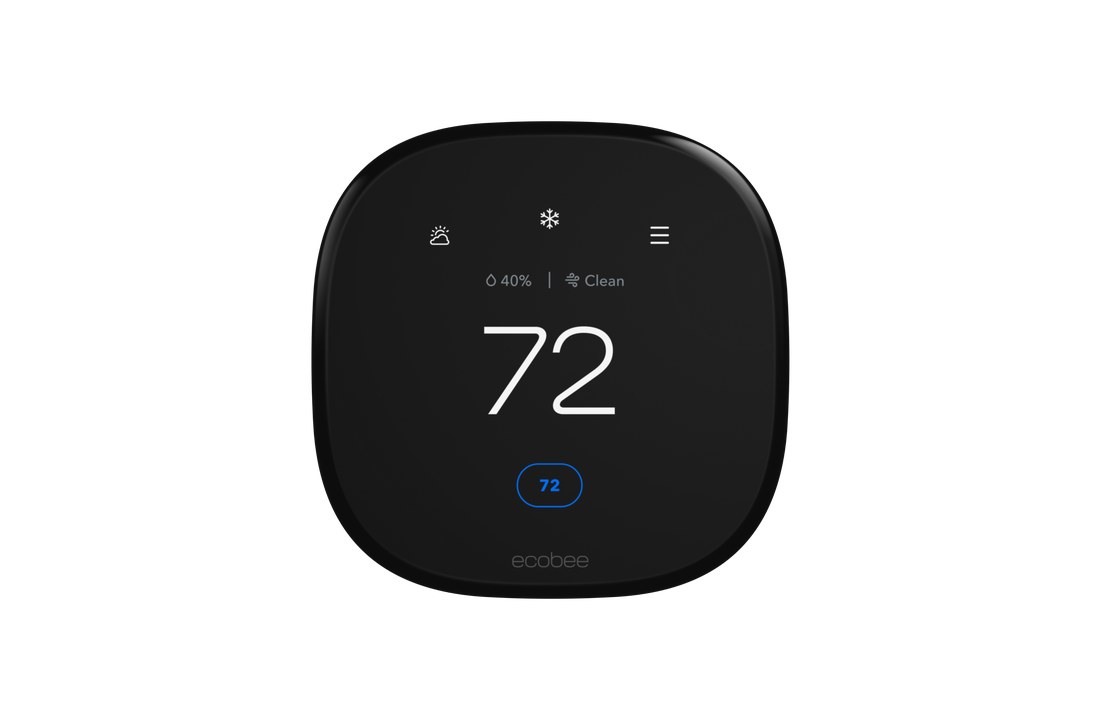
The Premium is the best-looking thermostat on the market — a sleek glass front with a bright, colourful touchscreen and a mirror-like finish that looks intentional on a wall rather than like a utility control. The interface is clear and responsive, showing temperature, weather and air quality at a glance. It is a small thing, but a thermostat is on your wall every day, and the Premium is the one you are happy to look at. The build quality matches the price.
The SmartSensor and room comfort
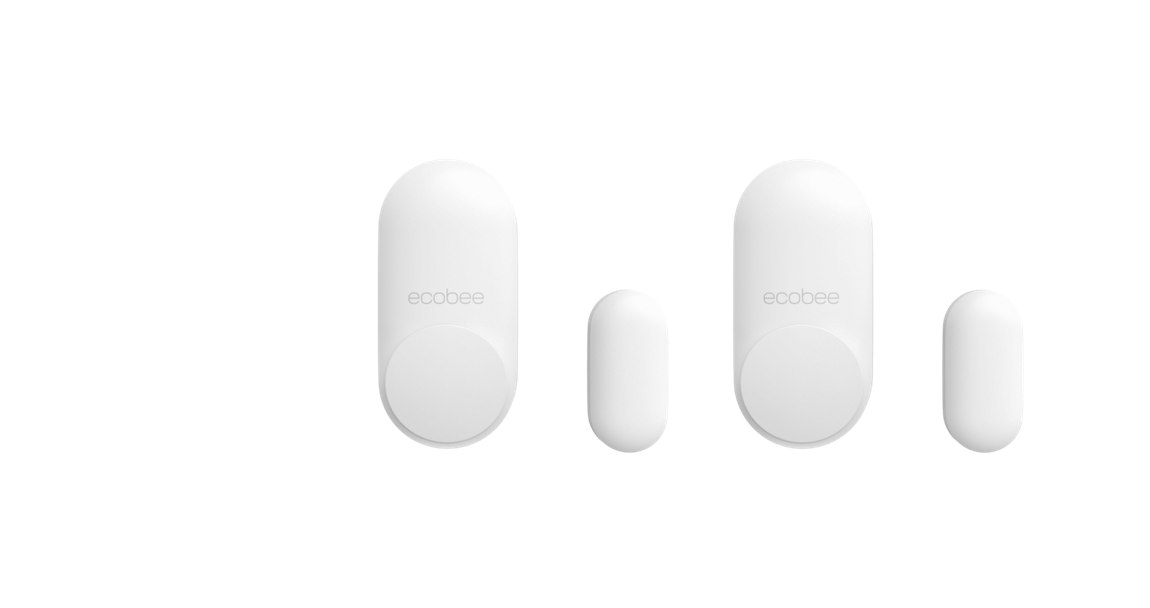
The SmartSensor is the feature that justifies the Premium over cheaper thermostats. Placed in a bedroom or a home office, it reports that room’s temperature and whether someone is there, so the system heats or cools to keep the rooms you actually use comfortable — not just the spot by the thermostat. In our testing this directly solved the classic ‘freezing office, roasting living room’ problem. You can add more sensors for more rooms, and the comfort improvement is immediate and real.
Air quality monitoring
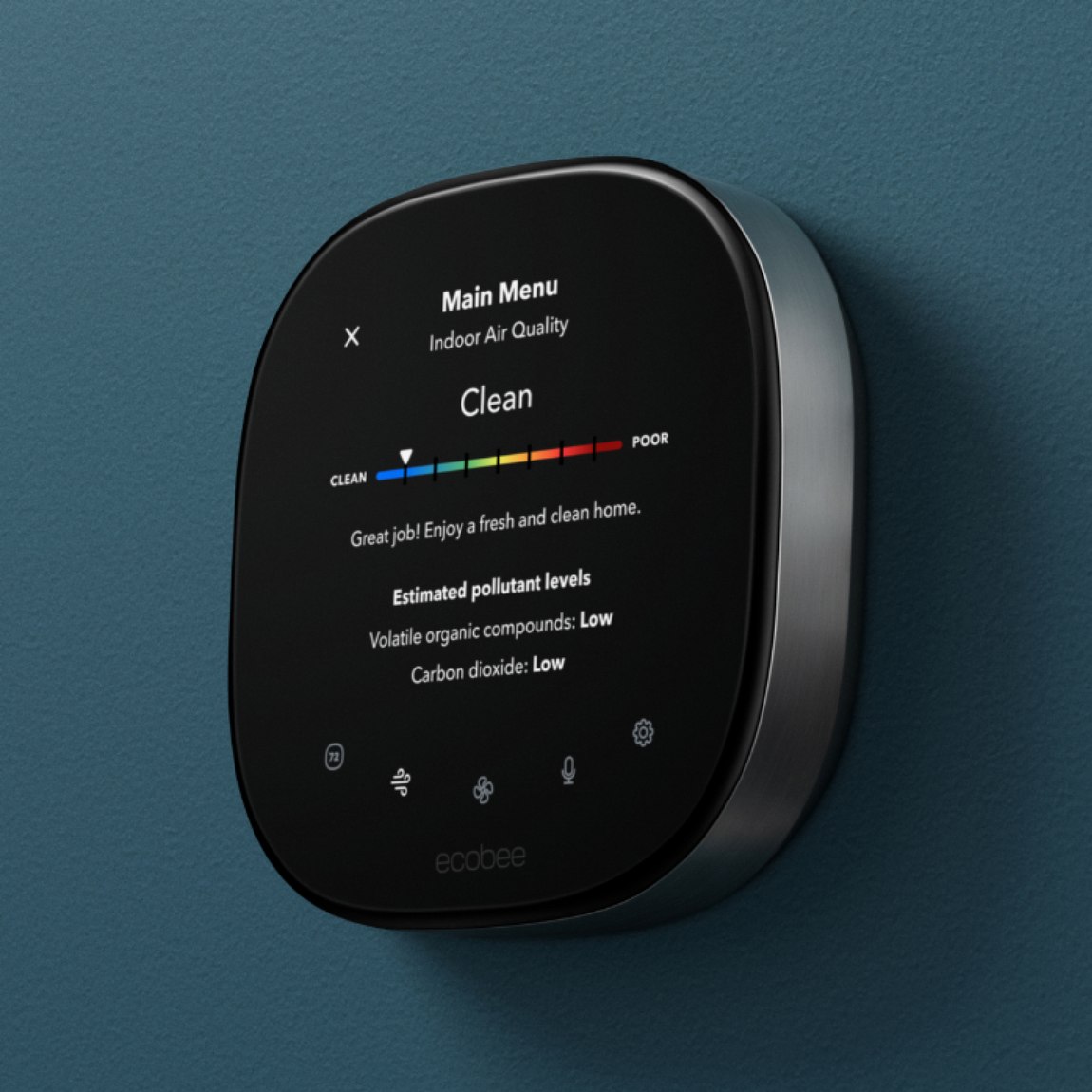
The Premium adds something most thermostats do not: built-in indoor air-quality monitoring. It tracks IAQ and alerts you when it drops, offers tips to improve it, and reminds you when your HVAC filter needs changing. In our testing the air-quality readings were a useful nudge — a visible number that prompted opening a window or changing a filter. It is not a replacement for a dedicated air-quality monitor, but as a bonus built into the thermostat, it adds genuine value to the health of your home.
Energy savings
The core promise of a smart thermostat is lower bills, and the Premium delivers by heating and cooling based on your schedule and who is home. It learns your routine, uses geofencing and the sensor to know when the house is empty, and adjusts automatically — ecobee cites savings of up to around $284 a year. In our testing the savings were real, driven mostly by not conditioning an empty house. Over a couple of years, the energy savings meaningfully offset the purchase price.
Setup and installation
Installation is a hardwired job — you connect it to your HVAC wiring, and most homes have the required common (C) wire or ecobee’s included adapter handles it. It takes 30–45 minutes for a confident DIYer following the clear in-app guide; those uncomfortable with thermostat wiring should have it professionally installed. Being hardwired means you never replace batteries or lose control. Once installed, setup in the app is quick and the sensor pairs automatically.
Smart home and voice
The Premium is a strong smart-home citizen: Siri and Alexa are built in (it doubles as a smart speaker), and it works with Google Assistant, Apple HomeKit and Samsung SmartThings, so it fits whatever ecosystem you use. It even adds security-flavoured extras like doorbell Live View and smoke-alarm detection through its sensors and microphone. In our testing the voice control and integrations were reliable, making it a genuine hub feature rather than a bolt-on.
How it compares to the alternatives
Against the Google Nest Learning Thermostat, the ecobee Premium’s decisive advantage is the included room sensor — Nest sells sensors separately — plus built-in air-quality monitoring and broader ecosystem support (including HomeKit). The Nest counters with its iconic dial design and auto-learning. For most homes, the ecobee’s sensor and air-quality features make it the more complete package. Against basic Wi-Fi thermostats, the Premium’s sensing and smarts are a clear step up.
Price, value and warranty
At around $249 the Premium is the priciest mainstream smart thermostat, but the included SmartSensor (a $50 value) and air-quality monitor justify the gap over cheaper models, and the energy savings offset the cost over time. Ecobee backs it with a 3-year warranty, longer than most. For a homeowner who wants room-by-room comfort and will actually use the sensor, it is strong value; for a single-room apartment where the sensor adds little, a cheaper model may suffice.
Who it is for, and who should skip it
Buy it if you have a home with hot and cold rooms, want to fix comfort where you actually sit, and value air-quality monitoring and deep smart-home integration. Skip it (for a cheaper ecobee or a Nest) if you live in a small, single-zone space where a room sensor adds little, or if you cannot use the smarter features. For most homes, though, it is the smart thermostat we recommend first.
Pros & cons
What we like
- Included room sensor fixes cold-office and hot-spot problems
- Built-in indoor air-quality monitoring and filter reminders
- Real energy savings from schedule- and occupancy-based control
- Siri and Alexa built in; works with Google, HomeKit, SmartThings
- The best-looking thermostat, with a 3-year warranty
Worth knowing
- Priciest mainstream smart thermostat
- Hardwired install — needs a C wire or the included adapter
- Air-quality monitor is a bonus, not a lab-grade sensor
- Overkill for a small, single-zone home
Where to buy the ecobee Smart Thermostat Premium
Check the current price and availability before you buy — it moves.
Check the price →FAQ
Is the ecobee Smart Thermostat Premium worth it?
ecobee Premium vs Google Nest — which is better?
What does the ecobee SmartSensor do?
Does the ecobee Premium save energy?
Is the ecobee Premium hard to install?
Does the ecobee Premium work with HomeKit and Alexa?
The Finer Home may earn a commission if you buy through links on this page, at no extra cost to you. We buy and test what we review; prices were accurate at publishing — confirm at checkout. See our affiliate disclosure.