Herman Miller Embody Chair Review
The verdict
$1,995How we tested the Herman Miller Embody
We sat in the Embody for full workdays over three months — testing the pixelated back, dialling in Backfit, judging spine support and long-hours comfort.
- Sat in it for full working days over three months
- Tested how the pixelated back moves with the spine
- Dialled in Backfit to match our natural curve
- Assessed comfort and posture over 8-plus-hour days
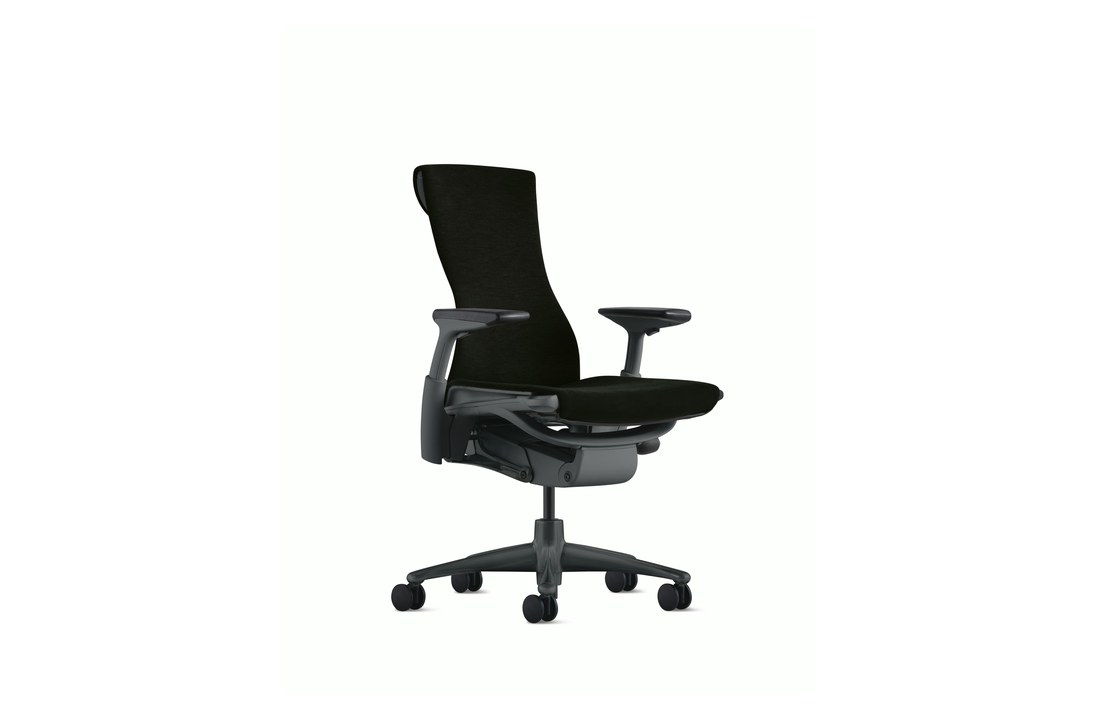
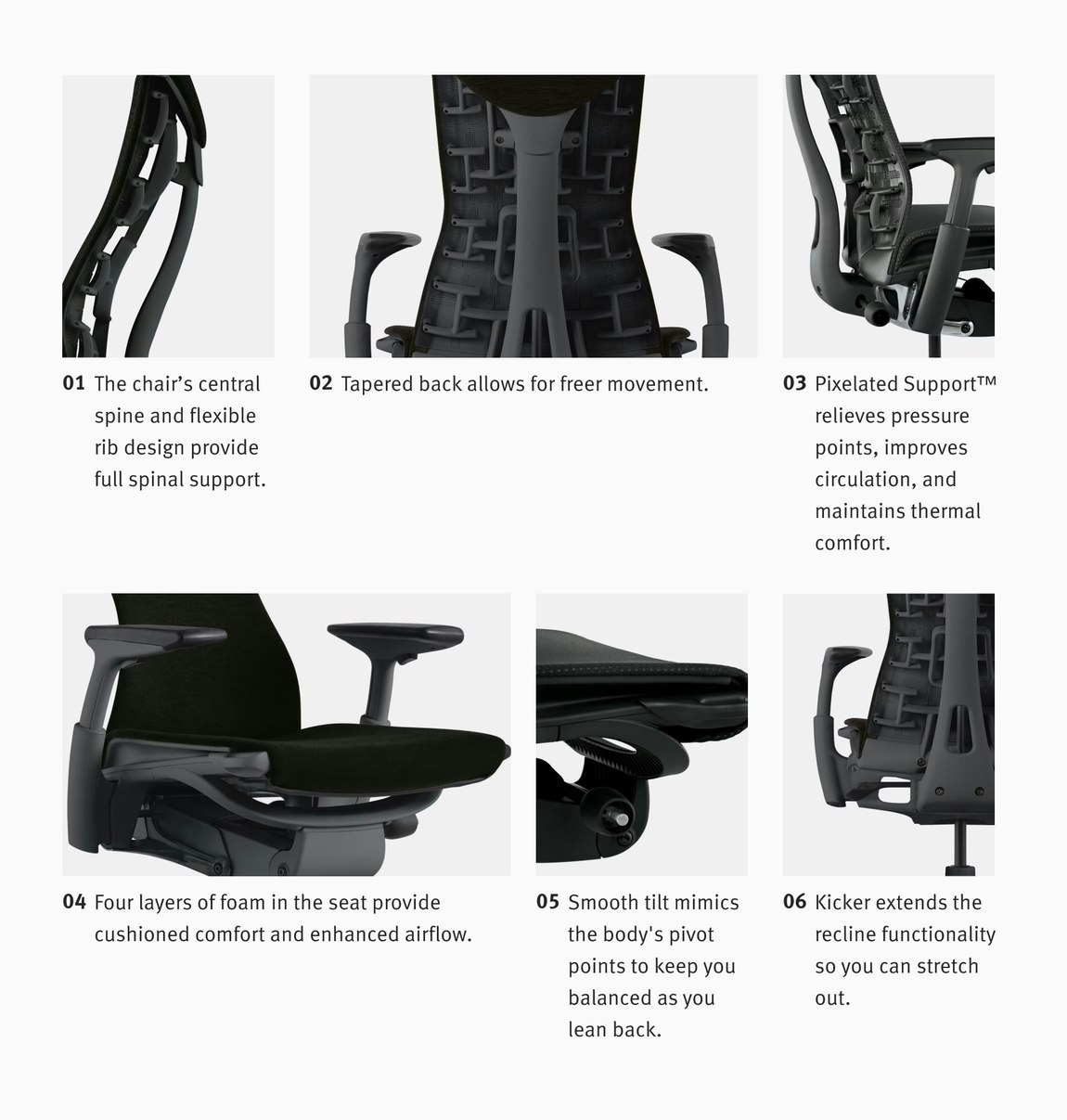
Most ergonomic chairs support you by holding you still. The Herman Miller Embody does the opposite — its pixelated back is a matrix of segments that move independently, flexing with every shift of your spine and encouraging the small, constant movement that keeps a back healthy over a long day. Add Backfit alignment to match the chair to your own curve, a breathable four-layer seat and a 12-year warranty, and it is the chair we recommend to people who feel every hour at a desk.
| Type | Ergonomic task chair |
| Back | Pixelated matrix that moves with the spine |
| Alignment | Backfit — matches the back to your spine’s curve |
| Seat | Four support layers with airflow |
| Support | Encourages healthy micro-movement all day |
| Sustainability | 44% recycled, up to 95% recyclable |
| Rated | 24/7 use, up to 300 lb |
| Warranty | 12 years, all parts |
| Made by | Herman Miller |
What the Herman Miller Embody is
The Embody is Herman Miller’s most health-focused task chair, designed with ergonomists and physicians around one idea: a chair should support movement, not restrict it. Its defining feature is the pixelated back — a matrix of small, independently flexing segments (the ‘pixels’) that move with your spine as you shift, lean and reach, mimicking the way your back naturally moves. It sits alongside the Aeron as Herman Miller’s flagship, but with a distinctly different philosophy of support.
Design and the pixelated back
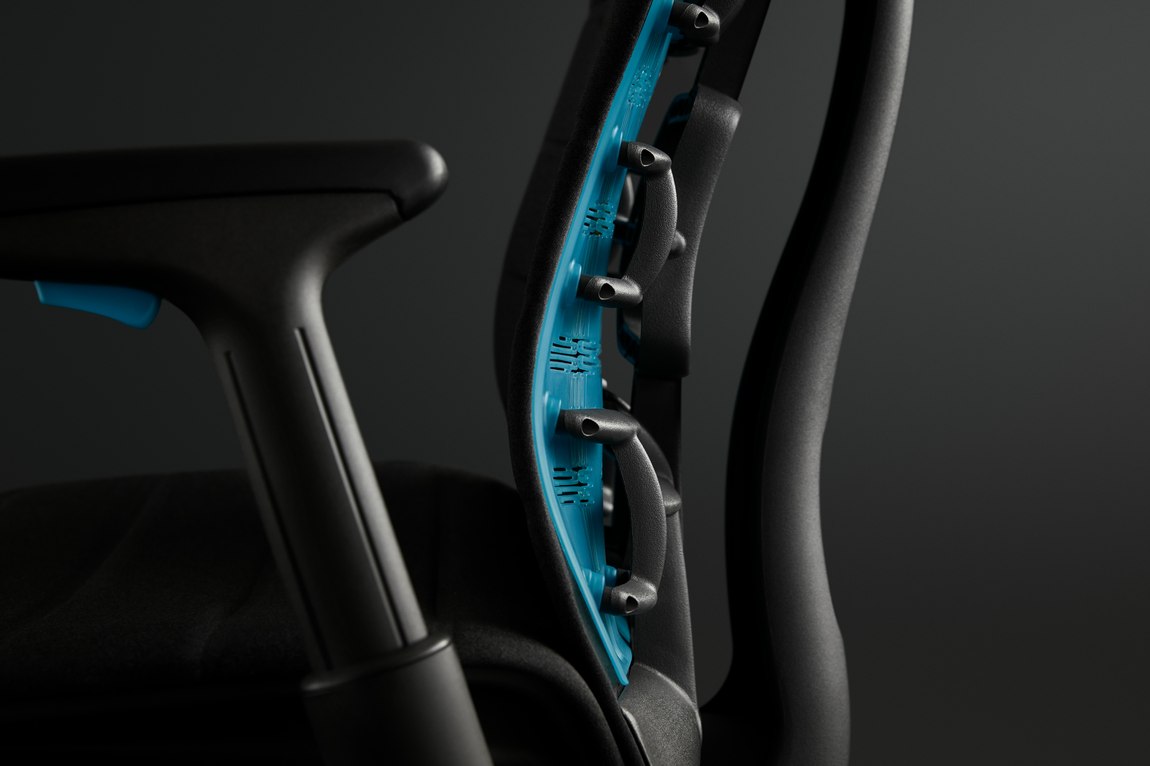
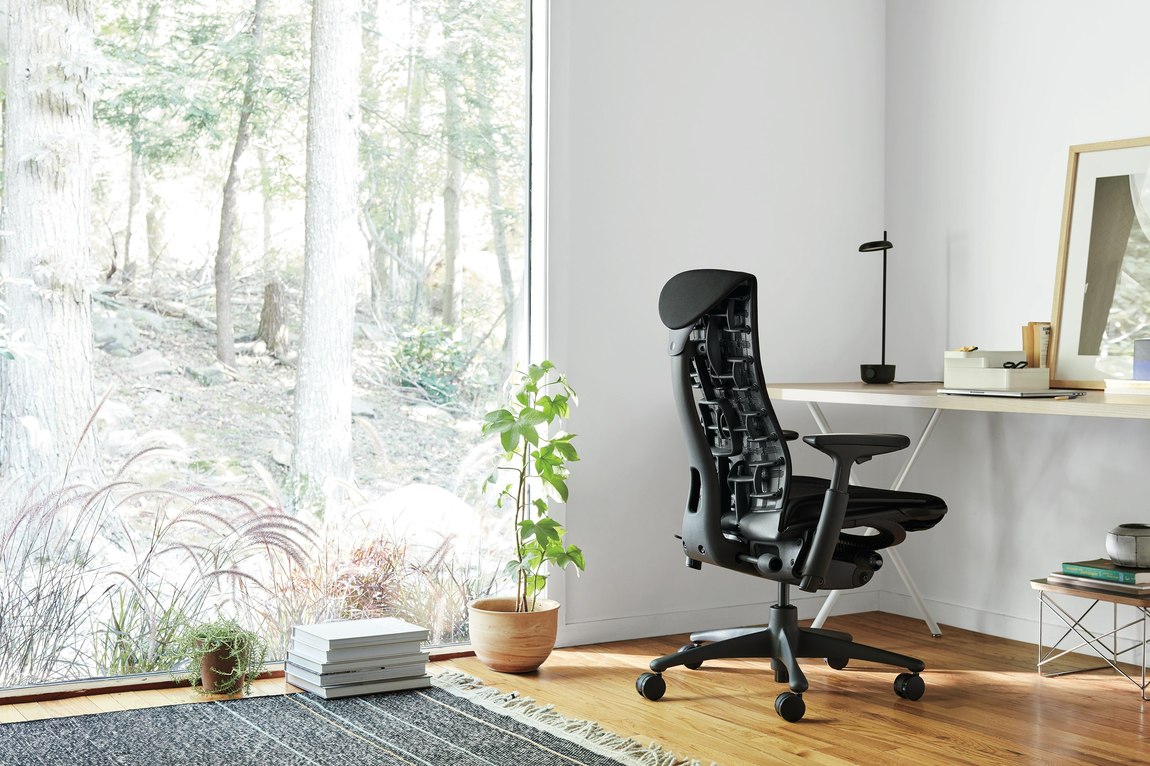
The Embody looks like nothing else — an exposed, spine-like back frame with a matrix of pixels beneath the fabric that visibly flex as you move. Function drives the look: the pixels distribute your weight and support your back across its whole surface while allowing constant micro-movement, which improves circulation and reduces the stiffness of sitting still. Four support layers in the seat mould to your shape while letting air through. It is a design object, but every part of it is engineered for the back.
Backfit and getting the fit right
The Embody’s signature adjustment is Backfit, which lets you set the curvature of the narrow back to match your own spine — aligning the chair’s support with your natural curve rather than forcing you into a fixed shape. In our testing, dialling in Backfit was the difference between a good chair and a great one: set to your spine, the support feels custom. It takes a few minutes to find your position, and once set, the chair holds a healthy posture without you thinking about it.
Ergonomics and back support
Support is the whole point. In our testing the pixelated back kept the spine supported across its full length while allowing the constant small movements that prevent stiffness — a genuinely different feel from a chair that locks you in place. It excels at encouraging an active, upright posture over long stretches, and for people with back sensitivity, the dynamic, movement-friendly support can be more comfortable than a firmer, static chair. It is one of the best chairs made for spine health specifically.
The sitting experience
The Embody feels firm and supportive, with a back that moves with you rather than pushing back at one point. Some people expect a plush chair and find it firmer than imagined; that firmness is deliberate, keeping you supported and slightly active rather than sunk in. In our testing it was comfortable for full working days, and the sense of the back tracking your movement is unusual and, once you adjust, welcome. It rewards a sitter who moves rather than one who wants to sink and stay.
Build quality and durability
Like the Aeron, the Embody is built to Herman Miller’s standard: engineered mechanisms, durable materials, and a rating for 24/7 use. The pixelated back and seat layers are designed to hold up to years of constant flexing, and the chair is 44% recycled and up to 95% recyclable. In practice these chairs last well over a decade of heavy use, which — with the 12-year, all-parts warranty — is the basis of the buy-once case. It is furniture, not a consumable.
How it compares to the alternatives
Against the Herman Miller Aeron, the Embody trades the Aeron’s cool mesh and sized fit for a movement-focused pixelated back and universal adjustability — the Embody is the better pick if dynamic spine support is your priority, the Aeron if breathability and precise sizing are. Against the Steelcase Leap, both emphasise back support through movement; the Embody’s pixelated approach is more distinctive, the Leap’s padding more conventionally comfortable. Against cheaper chairs, the Embody’s engineering is in another class.
Price, value and warranty
At around $1,995 the Embody is among the most expensive office chairs, and the value case is the same as the Aeron’s: a chair engineered for your back that lasts 15-plus years, backed by a 12-year, all-parts warranty. For someone who sits all day and feels it — especially with back issues — the daily benefit and long lifespan make the cost per year small. For lighter use, it is more chair (and more money) than needed. You are paying for spine-specific engineering.
Who it is for, and who should skip it
Buy it if you sit for long hours, want a chair that moves with your spine and encourages healthy posture, and value a health-focused design — especially if you have back sensitivity. Skip it if you want cool mesh (the Aeron) or a plush padded feel (the Leap), if you sit only occasionally, or if the price is out of reach. For the sitter who wants the most spine-focused chair made, the Embody is it.
Pros & cons
What we like
- Pixelated back moves with the spine and encourages micro-movement
- Backfit aligns the chair’s support to your natural curve
- Breathable four-layer seat supports without pressure points
- Built for 24/7 use with a 12-year, all-parts warranty
- One of the best chairs made for spine health specifically
Worth knowing
- Very expensive, among the priciest office chairs
- Firm, active feel — not the plush sit some expect
- Distinctive look is not to everyone’s taste
- Takes time to dial in Backfit for the full benefit
Where to buy the Herman Miller Embody
Check the current price and availability before you buy — it moves.
Check the price →FAQ
Is the Herman Miller Embody worth it?
Embody vs Aeron — which should I buy?
What is the Embody’s pixelated back?
Is the Herman Miller Embody good for back pain?
Is the Embody comfortable for long hours?
How long does a Herman Miller Embody last?
The Finer Home may earn a commission if you buy through links on this page, at no extra cost to you. We buy and test what we review; prices were accurate at publishing — confirm at checkout. See our affiliate disclosure.