The verdict
$349How we tested the Oura Ring 4
We wore the Ring 4 day and night for two months — comparing its sleep and heart-rate data against other devices, using the Readiness score, and testing battery, comfort and the membership.
- Wore it 24/7 for two months, sleeping in it every night
- Compared sleep-stage and heart-rate data with other trackers
- Used the daily Readiness score to guide training and rest
- Tested battery life, comfort and the membership paywall
A wrist tracker is hard to ignore and easy to take off. The Oura Ring 4 is neither — a lightweight titanium ring you wear day and night without noticing, quietly measuring your sleep, heart rate and temperature. What sets it apart is not the sensors but the interpretation: its Readiness score turns a night’s data into one clear signal of how recovered you are, and it is accurate enough to trust. For sleep and recovery specifically, it is the tracker we recommend first.
| Type | Smart ring — sleep, recovery & activity |
| Sensors | Heart rate, SpO2, skin temperature |
| Sensing | Smart Sensing, 18 signal pathways |
| Battery | 5–8 days; charge 20–80 min |
| Sleep accuracy | Within ~15% of clinical polysomnography |
| Scores | Sleep, Readiness, Activity |
| Build | Titanium, sizes 4–15 |
| Membership | $5.99/mo or $69.99/yr (for full data) |
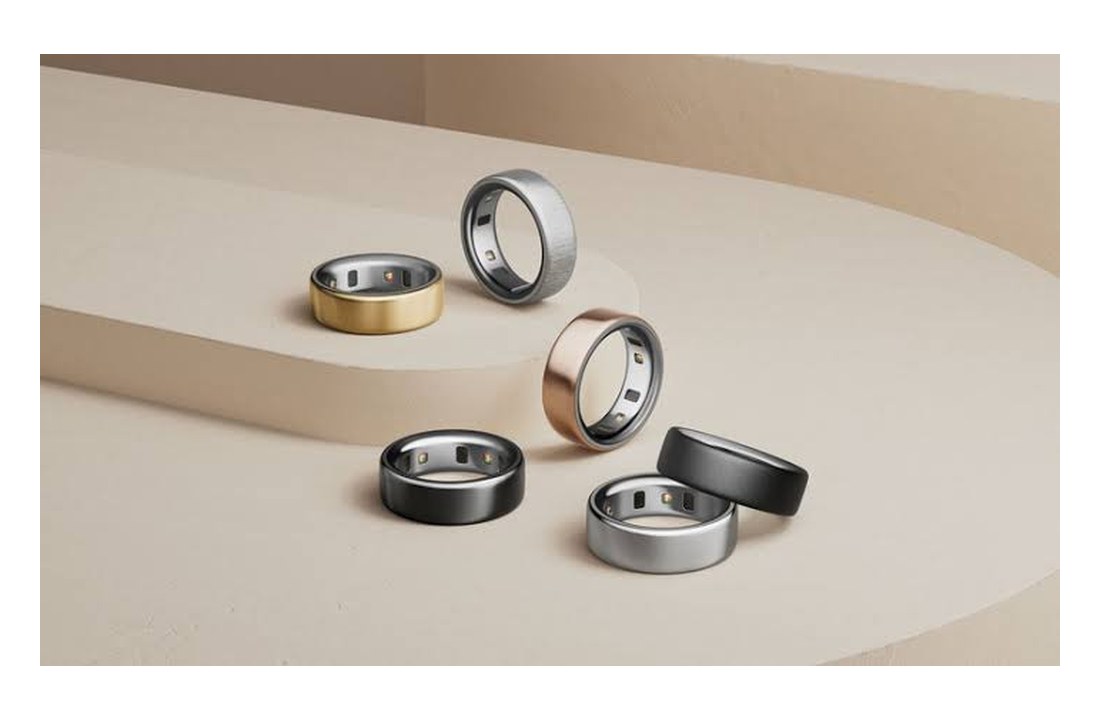
| Finishes | Silver, Black, Stealth, Gold, Rose Gold |
What the Oura Ring 4 is
The Oura Ring 4 is a smart ring that tracks sleep, recovery and activity from your finger rather than your wrist. Inside a titanium band sit sensors for heart rate, blood oxygen and skin temperature, sampling continuously through the night and periodically by day. It feeds a companion app that reports your sleep stages, a daily Readiness score and activity, aiming to answer one question well: how recovered are you today. It is the fourth generation of the ring that defined the category.
Design and build quality
The Ring 4’s appeal starts with how little you notice it. It is a smooth titanium band — no protruding sensor bump this generation, so it sits flush and comfortable — light enough to wear around the clock and durable enough for daily life, water and workouts. It comes in sizes 4 to 15 (a sizing kit ships first) and several finishes from plain silver to gold and stealth black. It reads as jewellery, not a gadget, which is exactly why people actually keep wearing it.
Sensors and accuracy
The Gen 4 upgraded to Smart Sensing with 18 signal pathways, letting it read accurately regardless of how the ring rotates on your finger — a real improvement over older rings. In our testing the heart-rate and sleep-stage data tracked closely with more expensive equipment, with sleep-stage accuracy reported within about 15% of a clinical sleep study. Skin-temperature trends are useful for spotting illness or, for some users, cycle tracking. For a consumer device, the accuracy is genuinely good.
Sleep tracking
Sleep is Oura’s home turf. It reports time in light, deep and REM sleep, latency, efficiency and disturbances, and rolls them into a nightly Sleep score. In our testing the breakdown was consistent and matched how rested we felt, and the long-term trends — how your sleep shifts with travel, alcohol or stress — are where the real insight lives. Unlike a watch, it is unobtrusive enough to wear every single night, which is what makes the sleep data actually complete.
Readiness and daytime tracking
The Readiness score is Oura’s best idea: each morning it combines resting heart rate, heart-rate variability, temperature and prior sleep into one number telling you how recovered you are — a genuine nudge to push hard or take it easy. By day it tracks activity, steps and heart rate, though as a fitness tracker it is lighter than a dedicated sports watch. Its strength is recovery and readiness, not workout metrics; used that way, the guidance is genuinely actionable.
Battery and charging
Battery life is a practical 5 to 8 days on a charge, and it tops up in 20 to 80 minutes on its little dock — long enough that charging becomes a quick habit rather than a nightly chore, and crucially you can wear it to sleep every night. That week-long battery is a real advantage over smartwatches that need nightly charging and therefore miss sleep data. You simply charge it while you shower every few days.
The app and membership
The app is clear and well-designed, turning data into plain-language guidance rather than raw charts. The catch is the membership: $5.99 a month (or $69.99 a year) is required to see anything beyond the last seven days — all the scores, trends and insights that make the ring worth owning sit behind it. The hardware without membership is nearly useless, so treat the subscription as part of the price. It is modest, but it is mandatory for the full experience.
How it compares to the alternatives
Against a smartwatch like an Apple Watch, the Oura wins on comfort, week-long battery and all-night wearability — and therefore on sleep-data completeness — while giving up on-wrist notifications, a screen and serious workout tracking. Against rival smart rings, the Ring 4’s flush design, improved sensing and, above all, Oura’s mature scoring keep it the benchmark. Against a chest strap or dedicated recovery device, it is far more livable for 24/7 wear.
Price, value and membership
At $349 plus about $70 a year for membership, the Oura Ring 4 is a premium tracker with a recurring cost, and the value depends on how much you act on recovery data. For someone who genuinely uses the Readiness score to guide training, sleep and stress, it is one of the more actionable health devices you can own. For someone who will glance at it twice and forget, the ongoing membership makes it poor value. Buy it to use it.
Who it is for, and who should skip it
Buy it if you want accurate, discreet, all-night sleep and recovery tracking you will actually wear every night, and you will use the Readiness score to make decisions. Skip it if you want a full smartwatch with a screen and workout tracking, if you dislike subscriptions (the membership is mandatory for the good data), or if you would not act on the insights. For sleep and recovery, though, it is the tracker we trust most.
Pros & cons
What we like
- Accurate sleep-stage and recovery tracking in a discreet ring
- Readiness score turns data into one actionable signal
- Comfortable enough to wear every night — complete sleep data
- 5–8 day battery beats nightly-charging smartwatches
- Flush titanium design reads as jewellery, not a gadget
Worth knowing
- Membership ($5.99/mo) is mandatory for the useful data
- Lighter than a sports watch for workout tracking
- No screen or on-wrist notifications
- Sizing kit adds a step before your ring ships
Where to buy the Oura Ring 4
Check the current price and availability before you buy — it moves.
Check the price →FAQ
Is the Oura Ring 4 accurate for sleep?
Does the Oura Ring require a subscription?
Oura Ring vs Apple Watch — which is better for sleep?
How long does the Oura Ring 4 battery last?
What is the Oura Readiness score?
Do you have to get sized for an Oura Ring?
The Finer Home may earn a commission if you buy through links on this page, at no extra cost to you. We buy and test what we review; prices were accurate at publishing — confirm at checkout. See our affiliate disclosure.