Wüsthof Classic 8-Inch Chef’s Knife Review
The verdict
$165How we tested the Wüsthof Classic Chef’s Knife
We prepped with the Classic 8-inch daily for three months — chopping, slicing, breaking down proteins — testing edge retention, balance, and how quickly it hones and sharpens back.
- Used it as our main knife daily for three months
- Chopped, sliced, minced and broke down proteins to judge versatility
- Tracked how long the PEtec edge held between honings
- Honed and sharpened it to test how forgiving the steel is
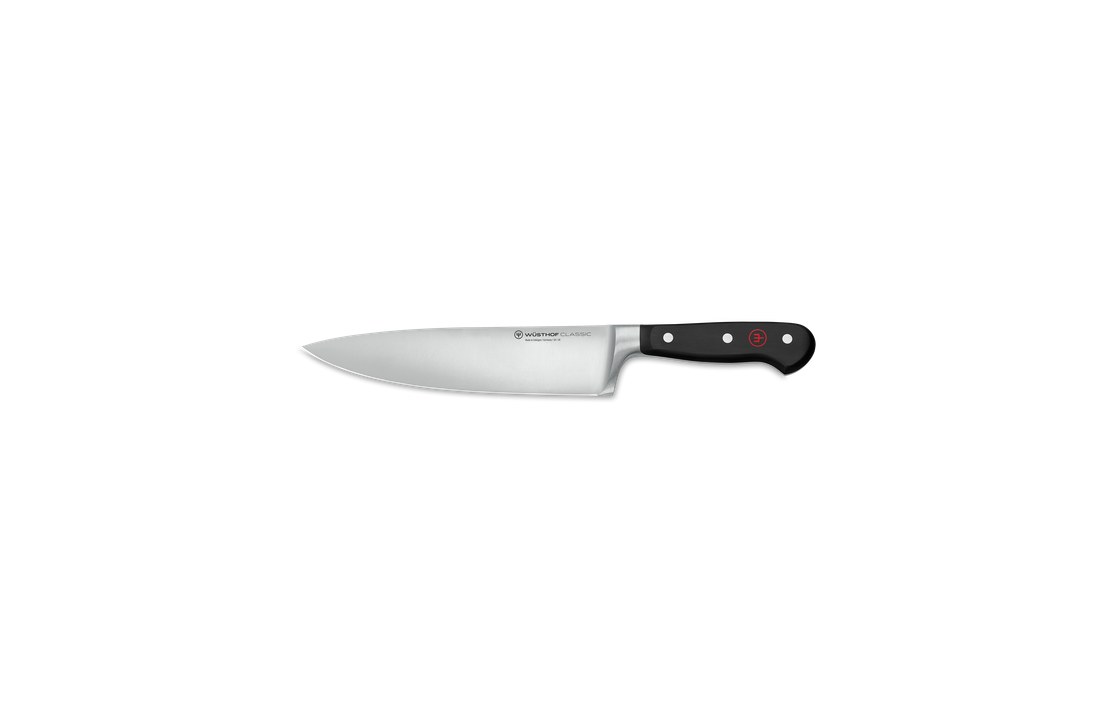
Ask a cook which single knife to own and the answer is almost always an 8-inch chef’s knife — and the Wüsthof Classic is the one that has earned that recommendation for decades. Forged from one block of high-carbon German steel, full-tang and full-bolstered, it is the balanced, durable workhorse that chops, slices and rocks through nearly everything a kitchen throws at it. It is not the flashiest knife you can buy, but it is the one you keep for life.
| Type | Forged German chef’s knife |
| Steel | High-carbon stainless, forged single block, 58 HRC |
| Edge | PEtec — 20% sharper, 2× edge retention |
| Blade | 8 in; 5 in handle; 8.5 oz |
| Construction | Full tang, triple-riveted, full bolster + finger guard |
| Handle | POM synthetic, fade-resistant |
| Made in | Solingen, Germany |
| Balance | Bolster-forward, heel-balanced |
| Warranty | Lifetime |
What the Wüsthof Classic is
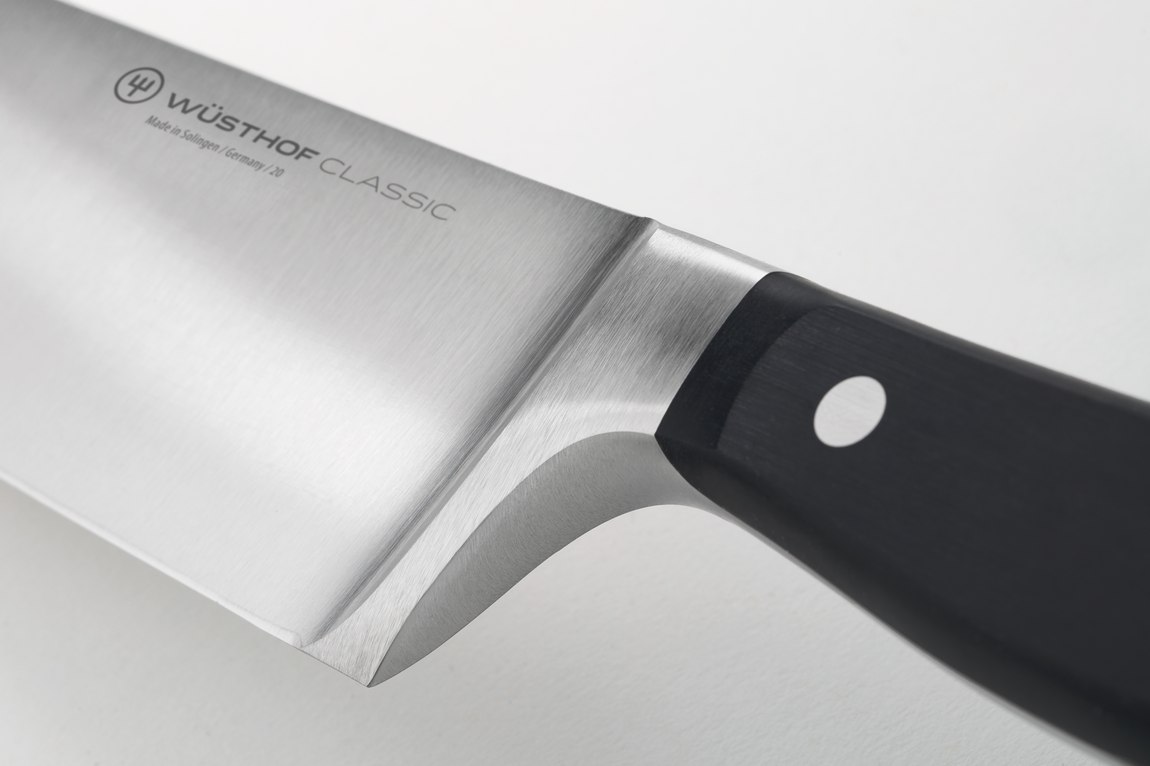
The Classic is Wüsthof’s flagship forged line, and the 8-inch chef’s knife is its centrepiece — the do-everything blade for chopping, slicing, dicing and mincing. ‘Forged’ is the key word: the blade is hammered and ground from a single block of steel rather than stamped from sheet, which is why it has a full bolster, a full tang and the heft that makes it feel substantial. It is the German-style knife most Western cooks learn on and keep.
Steel and construction
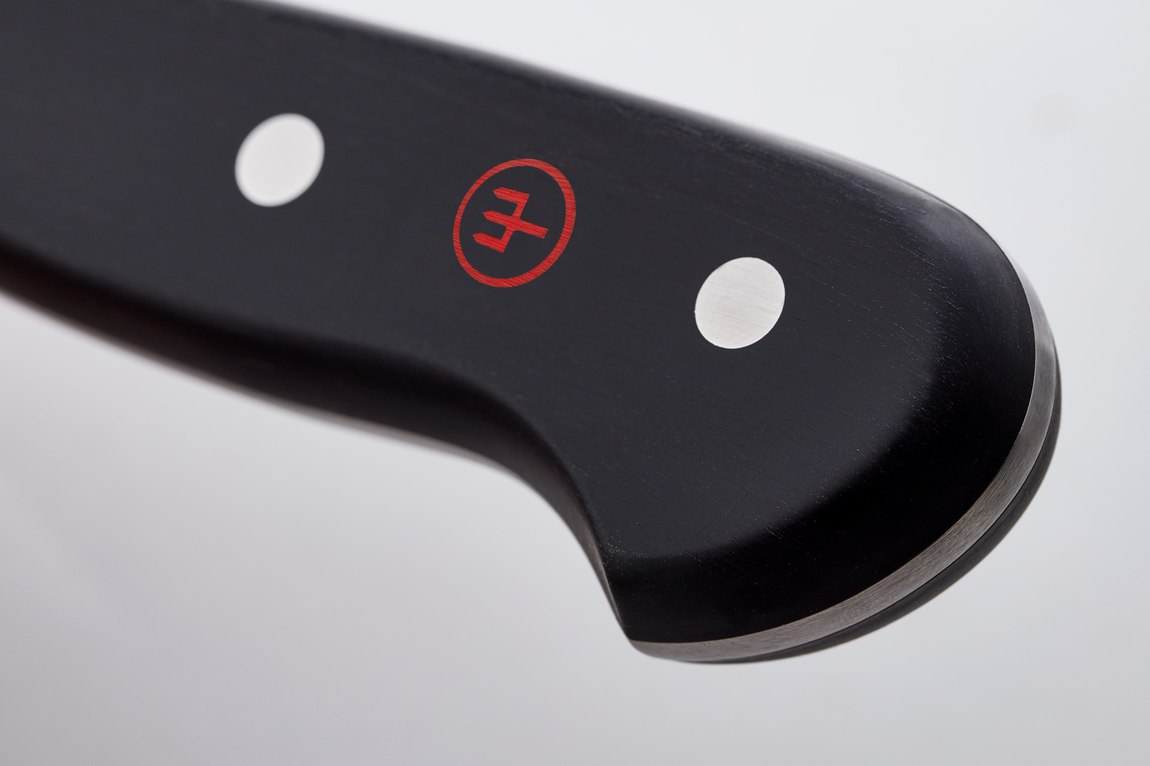
The blade is high-carbon stainless steel, forged as one piece and tempered to 58 on the Rockwell hardness scale — a sweet spot that holds an edge well while staying easy to sharpen. The full tang runs the length of a triple-riveted POM handle, and a full bolster adds weight at the heel and protects your fingers. This is old-school, over-built construction: there is nothing to loosen, delaminate or wear out, which is why these knives are handed down.
The edge and sharpness
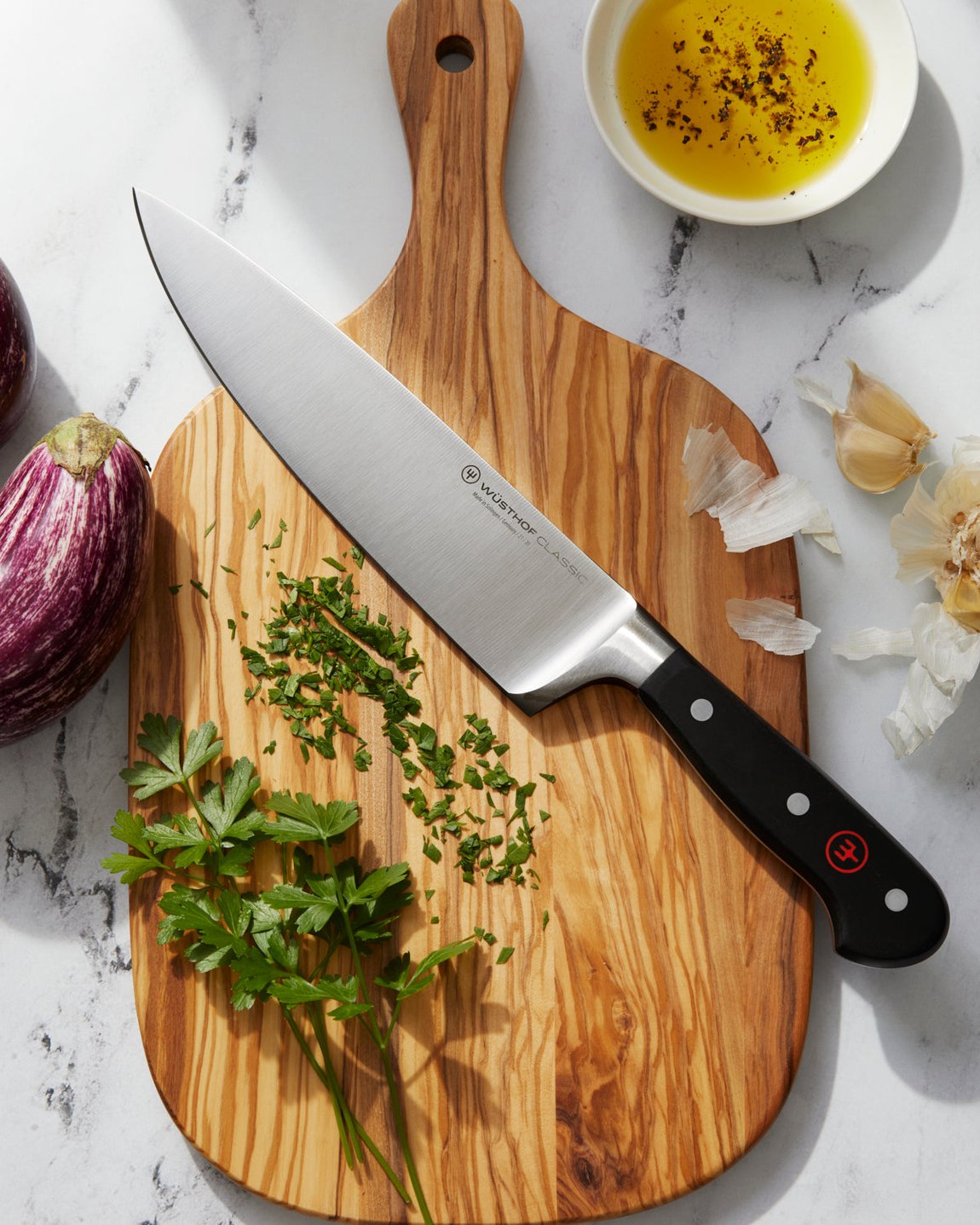
Modern Classics use Wüsthof’s PEtec edge, laser-measured and honed to be about 20% sharper with twice the edge retention of older models. Out of the box it is genuinely sharp, and in our testing it took and held a fine edge through weeks of daily prep. At 58 HRC the steel is softer than a Japanese blade, so it dulls a little sooner — but it also hones back to sharp in seconds on a steel and forgives the occasional bone or frozen edge that would chip a harder knife.
Cutting performance
This is where the Classic earns its keep. The curved German belly is made for rock-chopping herbs and vegetables, the weight helps it fall through dense produce like squash and onions, and the tall blade keeps knuckles clear of the board. In our testing it moved from mincing garlic to breaking down a chicken to slicing tomatoes without complaint. It is a jack-of-all-trades by design — not the ultimate slicer or the ultimate chopper, but excellent at everything a home cook does.
Handle, balance and feel
The Classic balances right at the bolster, which most cooks find natural for a pinch grip on the blade. The POM handle is contoured, grippy even when wet, and resists the fading and cracking that afflict cheaper handles. At 8.5 ounces it is a substantial knife — heavier than a Japanese equivalent — and that heft is either reassuring or tiring depending on your preference. For long prep sessions most people find the balance comfortable and controlled.
Care, honing and sharpening
A forged German knife rewards simple care: hand-wash and dry it (never the dishwasher, which dulls and corrodes), hone it on a steel before or after use to realign the edge, and sharpen it on a stone or pull-through every few months. Because the steel is on the softer side, sharpening is quick and forgiving — a real advantage for anyone new to maintaining a knife. Kept honed, it stays impressively sharp between sharpenings.
Living with it day to day
The Classic is the knife you reach for without thinking. It handles the overwhelming majority of kitchen tasks, so most home cooks genuinely need only this and a paring knife. It is robust enough that you do not baby it, forgiving enough that beginners thrive with it, and satisfying enough that it makes prep more pleasant. After years of daily use these knives look and cut almost like new — the definition of a buy-once tool.
How it compares to the alternatives
Against a budget favourite like the Victorinox Fibrox, the Wüsthof Classic adds forged heft, a full bolster and a more premium feel for several times the price — better in the hand, though the Victorinox cuts nearly as well. Against a Japanese gyuto (Shun, Miyabi), the Wüsthof is heavier, softer and more durable but less laser-sharp; the Japanese blade slices finer but chips more easily and demands more careful sharpening. The Classic is the sturdy all-rounder.
Price, value and warranty
At around $165 the Classic 8-inch is a mid-range chef’s knife that performs and lasts like a much pricier one. The lifetime warranty and Solingen forging mean it is genuinely a once-in-a-lifetime purchase — amortised over decades of daily use, the cost per year is trivial. Buying the single chef’s knife rather than a block set is the smart move: it is the knife you will actually use, and you can add pieces later.
Who it is for, and who should skip it
Buy it if you want one forged, durable, easy-to-sharpen chef’s knife that handles nearly everything and lasts a lifetime — the safe recommendation for almost any home cook. Skip it if you want the lightest, sharpest possible blade for fine work (a Japanese gyuto suits you better), or if you only cook occasionally and a $50 Victorinox will do. For the cook building a kitchen around one great knife, this is it.
Pros & cons
What we like
- Forged, full-tang, full-bolster build that lasts a lifetime
- PEtec edge is sharp out of the box and holds well
- Softer German steel is quick and forgiving to sharpen
- Balanced heft handles nearly every kitchen task
- Lifetime warranty, made in Solingen, Germany
Worth knowing
- Heavier than a Japanese chef’s knife
- Softer steel dulls sooner than a hard Japanese blade
- Pricier than budget workhorses that cut nearly as well
- Must be hand-washed — never dishwasher-safe
Where to buy the Wüsthof Classic Chef’s Knife
Check the current price and availability before you buy — it moves.
Check the price →FAQ
Is the Wüsthof Classic worth the money?
What size Wüsthof chef’s knife should I buy?
Wüsthof Classic vs a Japanese knife — which is better?
How do you sharpen a Wüsthof Classic?
Can you put a Wüsthof knife in the dishwasher?
Is the Wüsthof Classic good for beginners?
The Finer Home may earn a commission if you buy through links on this page, at no extra cost to you. We buy and test what we review; prices were accurate at publishing — confirm at checkout. See our affiliate disclosure.